
Syracuse and the surrounding Onondaga County area
Roof Leak Diagnosis and Repair in Syracuse and Onondaga County
Find out where the water is actually getting in before anybody prices a covering. A stained ceiling in this county has three common causes and only one of them is the shingles: a joint at a chimney, a wall, a valley or a vent pipe; a porch or addition roof built flatter than the slope shingles are rated for; or moisture condensing on a cold roof deck on a night when nothing fell on the house at all. Tell us what you are seeing, when it started and which town the house is in, and we will connect you with an insured contractor who names the entry point on paper before any work is agreed.
Request a Quote
Share a few details so we can confirm coverage and arrange the right next step.
Would you rather talk it through? Call (315) 640-3590, answered 24/7.
$100 off your first job
Credited by us on your first booked job.
- One credit per customer per property, on your first booked job.
- Valid through December 31, 2026.
Mention this offer when you book. Full terms.
Five jobs, sorted by where the water gets in
These are five different entry points rather than five sizes of the same job, and which one you have decides everything that comes after it. Water at one chimney, one skylight or one valley is a flashing question. Water over a porch, a back kitchen or an attached garage is usually a slope question, because section R905.2.2 of the 2025 Residential Code of New York State permits asphalt shingles only at 2 units vertical in 12 horizontal or steeper. Water that turns up on a cold, dry night never came through the covering at all. Start from the symptom on each card and you will usually land on the right one.
Roof and Attic Leak Diagnosis
Find out where the water is actually getting in before anyone prices a covering, including whether it came through the roof at all.
Start here if you have a stain, a drip or a damp patch on a ceiling or an upstairs wall, and nobody has yet told you where the water is getting in.
About Leak Diagnosis →Flat and Low-Slope Roofing
Find out whether a nearly flat porch, addition or garage roof leaks because it has the wrong covering on it, and what may lawfully go up there instead.
Start here if the leak is over a porch, a back kitchen, a dormer, a breezeway or an attached garage, and that roof looks nearly flat from the ground.
About Low-Slope Roofing →Flashing, Chimney and Skylight Repair
Rebuild the joint the water is actually using, at a chimney, wall, valley, vent or skylight, without re-covering a roof that is still doing its job.
Start here if the water shows up in one corner or under one feature, a chimney, a skylight, a valley, a dormer or the place a roof runs into a wall, while the rest of the roof behaves.
About Flashing Repair →Gutters, Downspouts and Roof Drainage
Get the water that leaves the roof away from the house properly, instead of over the gutter, behind the fascia or straight down the foundation wall.
Start here if the gutters overflow, sag or drip behind the boards, or the ground and the basement wall are wet where a downspout comes down.
About Gutters and Drainage →Attic Ventilation and Air Sealing
Stop indoor air reaching the cold roof deck, and get the vent area and the vent split right, so the attic stops making its own water.
Start here if the attic itself is the problem: frost or damp on the wood, insulation gone flat and dark, rusty nail points, or a ceiling that marks up every cold snap.
About Attic Ventilation →Not sure which one you need?
Describe what you are seeing and we will tell you what the job actually needs.
How a leak gets pinned down
Three steps, and the covering is the last thing anyone looks at rather than the first. The step that does most of the sorting happens on the phone, before a vehicle leaves.
Tell us what you saw, and what the weather was doing
The two most useful things you have are the date the stain appeared and whether it had rained. The NOAA 1991 to 2020 normals for Hancock International give a typical January 19.1 days with at least a hundredth of an inch of precipitation and only 7.2 days with a tenth or more, so about twelve January days record nothing measurable at all. A mark that grew on one of those days moves the whole search off the roof and into the attic, and that is settled in a phone call.
Someone works from the inside out, starting at the attic hatch
Water runs along the underside of the deck before it drops, so the wet plaster is rarely under the hole. The visit begins at the stain and at the hatch above it, looking for frost on the wood, rusted nail points, insulation gone flat and dark, and any duct that ends in the insulation instead of outdoors. Only then does it work up the slope to the joints that sit above the mark.
A written proposal naming the entry point and the repair
You get the place the water is getting in, the work needed to close it and what that work costs, in writing, for a repair the contractor intends to carry out. Where the honest answer is the attic rather than the covering, the proposal says so and prices that instead. Nothing on it obliges you to book anything.
What makes this a local problem
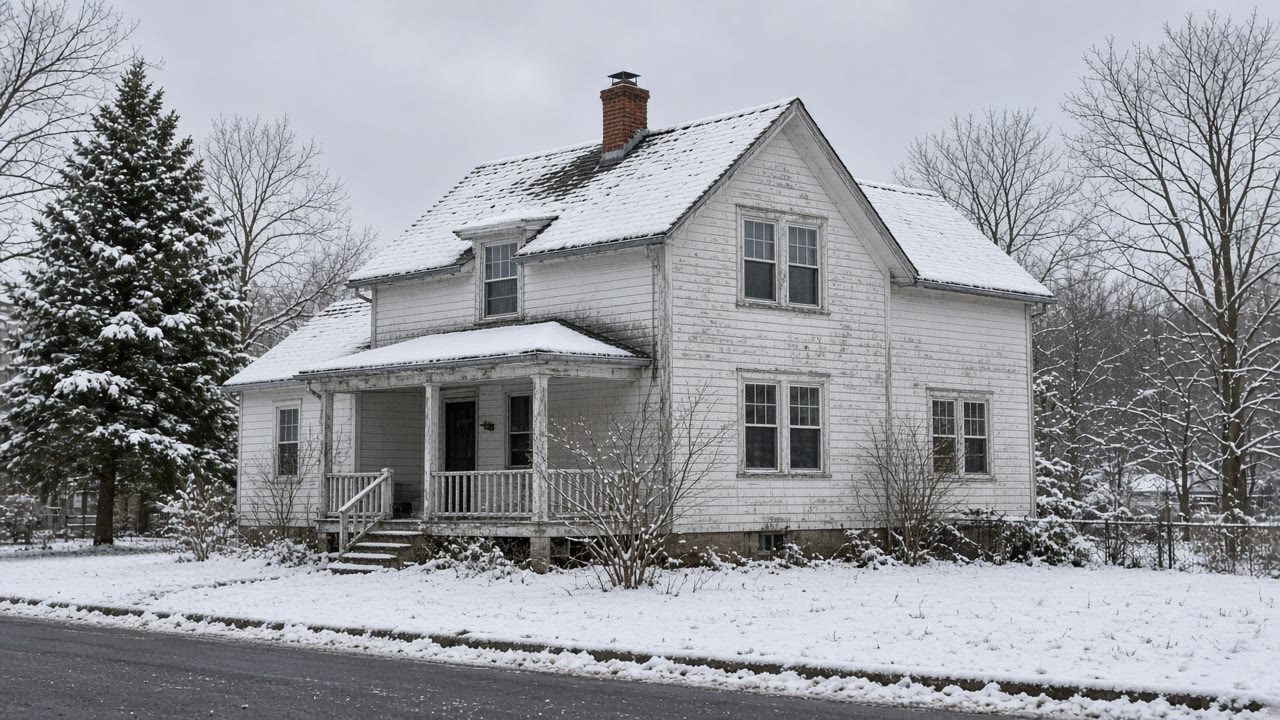
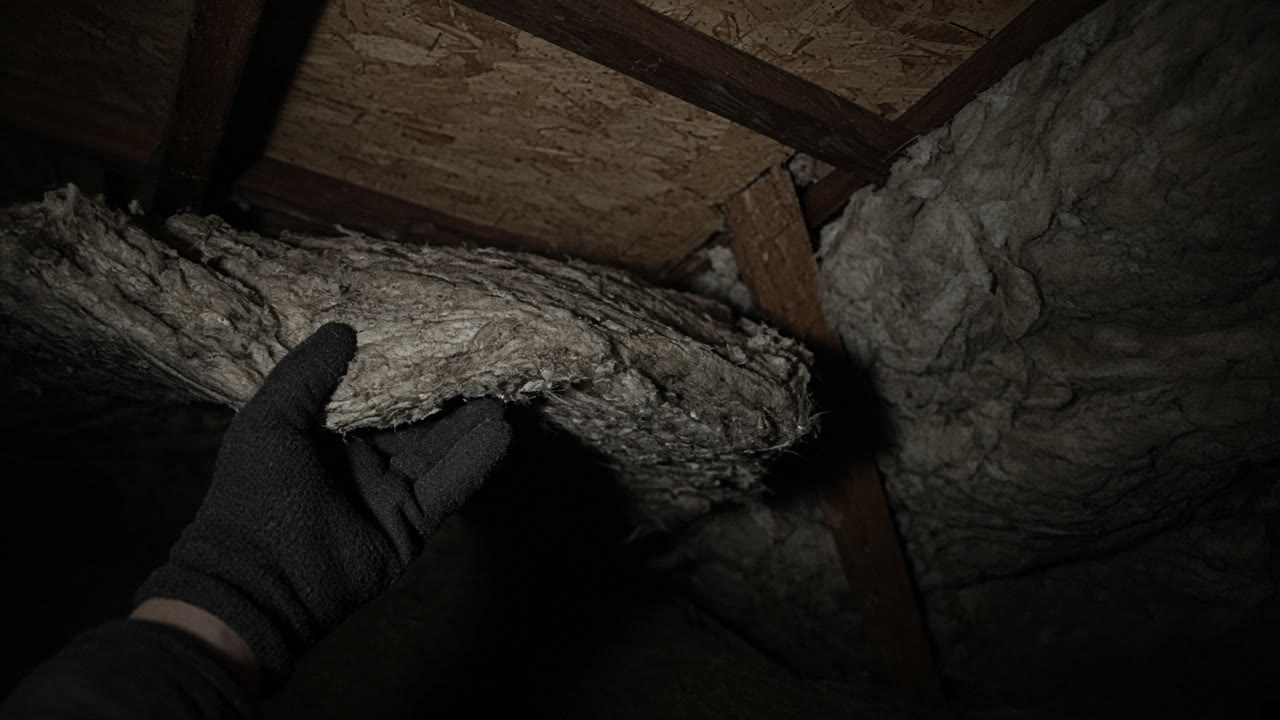
The Department of Energy's Building America Solution Center states that condensation occurs on building materials when their surface temperatures drop below the dew point of the air they are exposed to, and that in cold conditions that condensation often forms first as frost, which returns to liquid water when warmer weather arrives.
Source: US Department of Energy, Building America Solution Center, Pacific Northwest National Laboratory, accessed 2026-09-14
The NOAA 1991 to 2020 monthly normals for Hancock International give January 19.1 days with at least a hundredth of an inch of precipitation and only 7.2 days with a tenth of an inch or more. February runs 16.0 days and 6.3 days. So in a normal January about twelve days record no measurable precipitation at all and about twenty-four record less than a tenth of an inch.
Source: NOAA National Centers for Environmental Information, accessed 2026-09-14
Section R905.2.2 of the 2025 Residential Code of New York State provides that asphalt shingles shall be used only on roof slopes of 2 units vertical in 12 units horizontal, a 17 percent slope, or greater, and that from 2:12 up to 4:12 a double underlayment application is required. The wording is unchanged from the superseded 2020 edition.
Source: 2025 Residential Code of New York State, via UpCodes, accessed 2026-09-14
Section R903.2.1 of the 2025 Residential Code of New York State requires flashings at wall and roof intersections, wherever there is a change in roof slope or direction, and around roof openings, and requires a flashing to divert water away from the point where the eave of a sloped roof meets a vertical sidewall. Where the flashing is metal it must be corrosion resistant and not less than 0.019 inch thick, which is No. 26 galvanized sheet.
Source: 2025 Residential Code of New York State, via UpCodes, accessed 2026-09-14
A porch roof that keeps leaking is not a repair problem
If the water shows up over a porch, a back kitchen, a breezeway or an attached garage, look at how flat that roof is before you look at who fixed it last. Shingles are a water-shedding product. They work by gravity and overlap, and below a certain pitch gravity stops doing its half of the job.
Section R905.2.2 of the 2025 Residential Code of New York State draws the line at 2 units vertical in 12 horizontal, and from there up to 4:12 it asks for a double application of underlayment beneath them. A shingled roof under 2:12 is outside what its covering is rated for, so it lets water in during wind-driven rain and during a thaw, in the same spot, year after year, and each new patch buys a season.
Nobody publishes a count of how many roofs in this county sit below that line, and we will not pretend otherwise. What is known is that 22.6 percent of Onondaga County's 212,002 housing units were built in 1939 or earlier and 69.9 percent before 1980, which is the era when a low back addition was the ordinary way to grow a house. A level and a tape measure answer the question for your roof in five minutes, and the answer changes what you should be buying.
Why homeowners call us first
The first question is whether it is the roof at all
The Department of Energy's Building America Solution Center states that condensation forms on a building surface once that surface drops below the dew point of the air it is exposed to, and that in cold weather it arrives first as frost and turns back to water when the weather warms. In a Syracuse January the coldest surface in the house is the underside of the roof deck. A ceiling that marks up after a dry cold snap is that, and nothing laid over the top of it changes anything.
Four things cause a wet attic and only one of them is a vent
The same federal guide names the four conditions that have to line up: a surface below the dew point, a pressure difference with a hole in the air barrier to push air through it, humid indoor air, and nowhere for the moisture to dry to. Cutting in two more roof vents answers one of the four. That is why a house can be vented twice and go on dripping, and why sealing the ceiling plane comes before anything else gets spent.
The joints leak, not the field
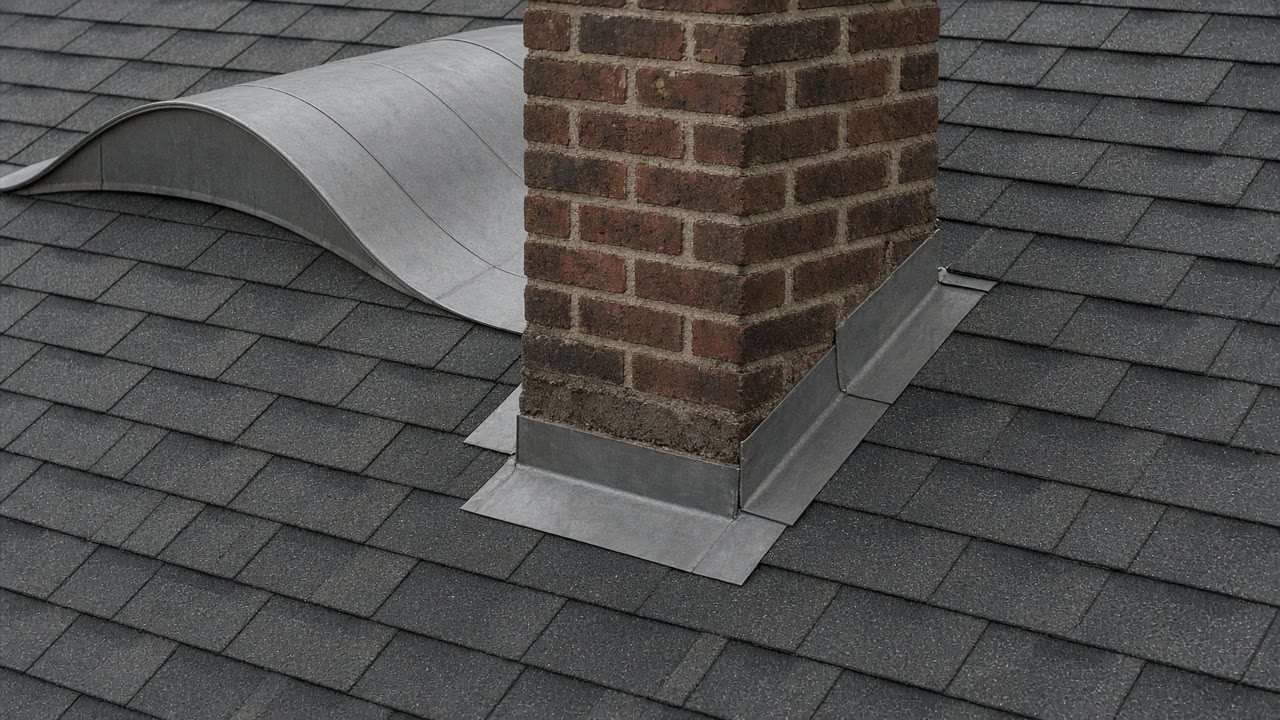
Section R903.2.1 of the 2025 Residential Code of New York State names where flashing has to be: wall and roof intersections, every change of slope or direction, around openings, and the point where an eave runs into a sidewall. Those are the same places water actually gets in. One stubborn corner under a clean field of shingles is a flashing question, and the acres of shingles around it are a distraction.
You get told what it is, in language you can repeat
The output of a visit is the location of the entry point and a written proposal for the repair, not a lecture and not a number with nothing behind it. If you want to take it to somebody else afterwards, it is written so that you can. That is the whole product here: knowing what is wrong is what stops you buying the wrong thing.
Coverage across Syracuse and the surrounding Onondaga County area
What people ask before they let anyone on the roof
I have a brown ring on the ceiling. Am I about to be told I need a whole roof?
Not unless you actually do. Three things cause most of these and only one of them is the covering: a joint at a chimney, wall, valley or vent pipe; a porch or addition roof built flatter than shingles are rated for; and water condensing on a cold roof deck, which is not a leak at all. They have three different fixes and two of them cost a fraction of a roof. The first job is to name which one you have, and that gets answered before anything is priced.
The stain appeared and it had not rained. What is that?
That is almost certainly condensation, and it is the one answer a new covering cannot fix. The Department of Energy's Building America Solution Center states that condensation forms on a surface as soon as that surface falls below the dew point of the air touching it, and that in cold conditions it shows up first as frost and returns to liquid water when it warms. Warm indoor air leaks up through light fittings, the attic hatch and pipe chases, meets the underside of a deck that is cold by design, freezes onto it, and runs off it in the thaw. Everything about the fix is inside the house.
Can I check any of this myself before I call anyone?
Yes, and it is worth twenty minutes at the hatch with a flashlight first. Look for a bathroom fan duct that stops in the insulation instead of carrying on outdoors, because the Department of Energy requires those fans to discharge outside and one that does not is delivering warm wet air onto the coldest surface in the house every single day. Then look along the eaves for insulation packed hard against the underside of the deck, where section R806.3 of the 2025 Residential Code of New York State asks for a clear space of at least 1 inch. If both come back clean, a visit is worth arranging. If the duct is loose in the insulation, you have found it yourself and it is a cheap afternoon.
It is one small stain and it has not grown. Does it need doing now?
Often it does not, and nobody here is going to tell you otherwise to get a visit on the calendar. A dry mark that has not changed through a wet spell and through a cold spell is a record of something that already happened rather than proof of something still happening. Draw a pencil line around the edge, write today's date beside it, and watch it. What should not wait is anything actively dripping, a ceiling that feels soft, or insulation that is wet to the touch: the Environmental Protection Agency's mold course puts the window at 24 to 48 hours, saying that items dried inside that time will in most cases not become moldy.
The same porch roof has been repaired three times and it still leaks.
Then the repairs were probably fine and the covering is wrong for that roof. Section R905.2.2 of the 2025 Residential Code of New York State allows asphalt shingles only on slopes of 2 units vertical in 12 horizontal or greater, and between 2:12 and 4:12 it wants two layers of underlayment underneath them. Shingles shed water down a slope, they do not seal it out, so below that line they let water in no matter who laid them. The code sets out what may go there instead: built-up roofing, modified bitumen, a single-ply membrane, sprayed polyurethane foam or a liquid-applied coating. That is a change of product, not another patch.
What happens if it turns out not to be the roof?
Then we say so, and the work moves to whatever it actually is: sealing the ceiling plane, clearing soffit vents that have been blocked by insulation, running a bath fan out through the wall or the roof instead of into the attic, or extending a downspout that is emptying at the foundation. It may not be the roof, and if it is not, a new roof will not fix it. Saying that costs us the larger job every time, and it is still the right answer, which is why it is written on this page instead of left for the doorstep.
Tell us what you are seeing
Tell us what you have and we will tell you where you stand.