
Onondaga County
Roof Leak Diagnosis in Liverpool Village
Frost on the roof boards of a Liverpool attic is not automatically an emergency, and what those boards are made of tells you how fast you have to move. The median village home dates to 1938 and 50.2 percent of the stock was standing before 1940, which usually means solid plank sheathing that can take on a wet spell and dry out again rather than the sheet material that cannot.
Request a quote in Liverpool
Share a few details so we can confirm coverage and arrange the right next step.
Would you rather talk it through? Call (315) 640-3590, answered 24/7.
$100 off your first job
Credited by us on your first booked job.
- One credit per customer per property, on your first booked job.
- Valid through December 31, 2026.
Mention this offer when you book. Full terms.
What Liverpool's plank roof boards do with water
Federal guidance is specific about roof materials and water. It recommends assemblies built of things that can safely store moisture, naming solid wood, treated cellulose and plywood, and it warns that oriented strand board is damaged far more easily, while fiberglass and foams store almost nothing and concentrate the moisture onto whatever is less tolerant beside them. That is why the same patch of frost means two different things in two houses. In Liverpool village it usually means the more forgiving version: 88.8 percent of the 1,344 units here went up before 1980 and only 11.2 percent since, under a median of 1938, so the deck over your head is very often board rather than sheet. The other number worth carrying around is 45F. New York's code sets that as the monthly average underside temperature at which a roof deck stops being a condensation risk, well above freezing, which is the part most people find hardest to accept: a deck can be wetting itself on a night that never came near frost. So a visit here establishes which surface the water came off and what that surface can tolerate, and then tells you whether the sensible plan is watching it through the rest of the winter or booking work.
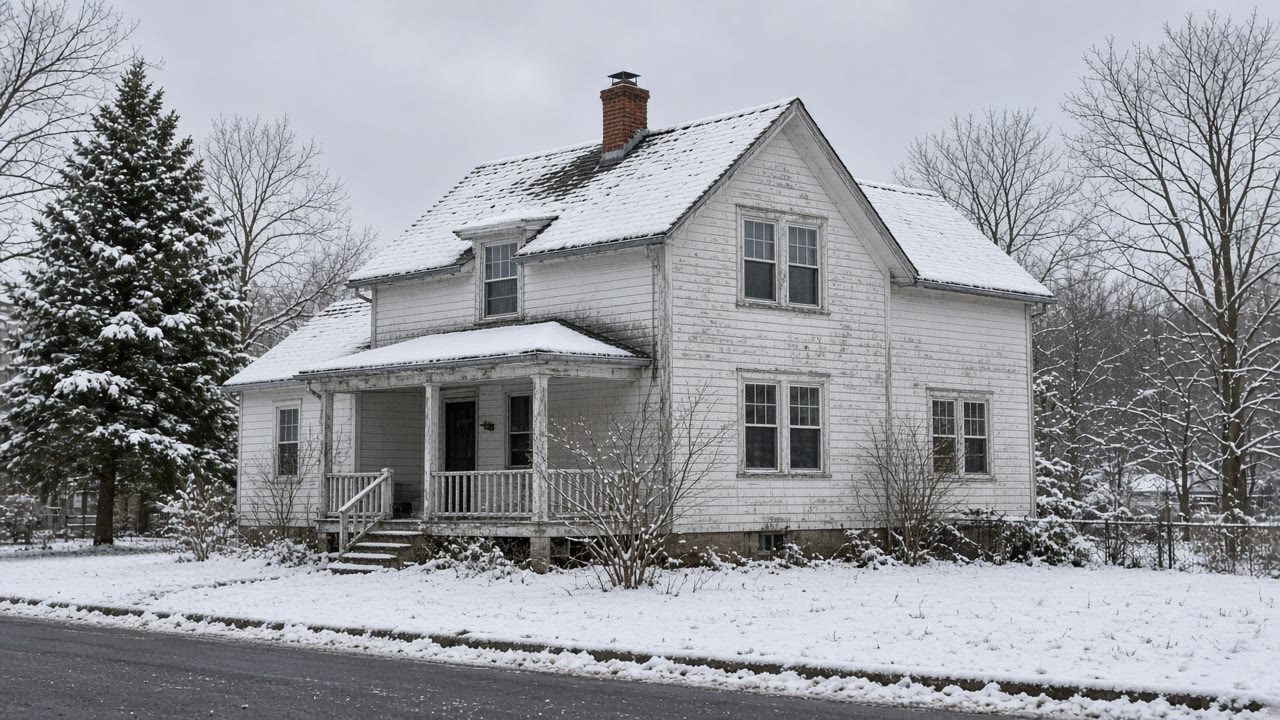
Frost on the boards and no idea how urgent it is?
Send the village address and what you can see from the hatch. We will arrange a visit that tells you whether this is a winter of watching or work to book.
Roof and attic work we arrange in Liverpool village
Roof and Attic Leak Diagnosis
Find out where the water is actually getting in before anyone prices a covering, including whether it came through the roof at all.
Leak Diagnosis in Liverpool →Flat and Low-Slope Roofing
Find out whether a nearly flat porch, addition or garage roof leaks because it has the wrong covering on it, and what may lawfully go up there instead.
Low-Slope Roofing in Liverpool →Flashing, Chimney and Skylight Repair
Rebuild the joint the water is actually using, at a chimney, wall, valley, vent or skylight, without re-covering a roof that is still doing its job.
Flashing Repair in Liverpool →Gutters, Downspouts and Roof Drainage
Get the water that leaves the roof away from the house properly, instead of over the gutter, behind the fascia or straight down the foundation wall.
Gutters and Drainage in Liverpool →Attic Ventilation and Air Sealing
Stop indoor air reaching the cold roof deck, and get the vent area and the vent split right, so the attic stops making its own water.
Attic Ventilation in Liverpool →Why a 1938 village reads its own frost differently
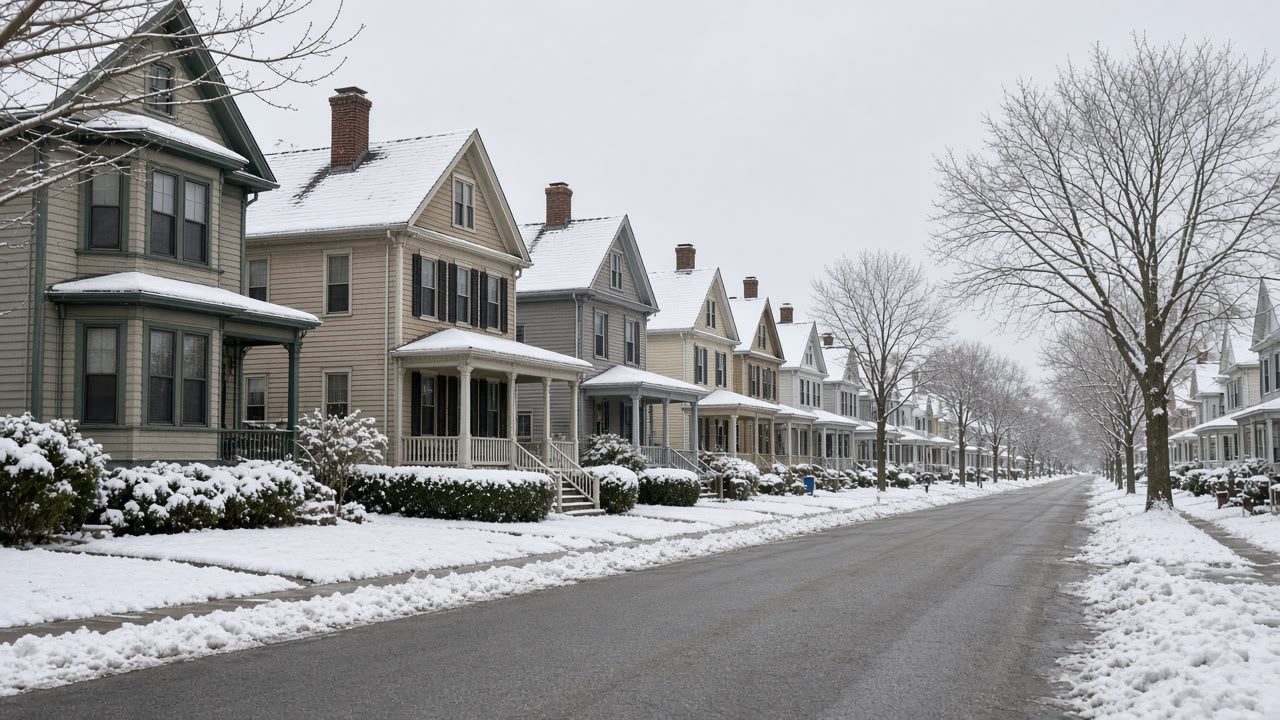
In Liverpool village the median year of construction is 1938. Of 1,344 housing units, 50.2 percent were built in 1939 or earlier, 60.4 percent before 1950, 88.8 percent before 1980 and 11.2 percent in 1980 or later. 62.9 percent are single-family detached and 62.9 percent of occupied units are owner occupied.
Source: US Census Bureau, American Community Survey 2020-2024 5-year estimates, tables B25034 year structure built, B25035 median year structure built, B25024 units in structure and B25003 tenure, accessed 2026-09-14
Liverpool village has 1,344 housing units with a median build year of 1938, 50.2 percent built in 1939 or earlier and 88.8 percent before 1980. 62.9 percent are single-family detached, 9.7 percent sit in two-unit buildings and 6.3 percent are single-family attached, and owner occupancy is 62.9 percent.
Source: US Census Bureau, American Community Survey 2020-2024 5-year estimates, tables B25034 year structure built, B25035 median year structure built, B25024 units in structure and B25003 tenure, accessed 2026-09-14
The Department of Energy guide advises using roof assembly materials that can safely store water, naming solid wood, treated cellulose and plywood, and warns that oriented strand board is more easily damaged by moisture while fiberglass and foams have little or no moisture storage capacity and can concentrate moisture on more sensitive materials in the assembly.
Source: US Department of Energy, Building America Solution Center, Pacific Northwest National Laboratory, accessed 2026-09-14
Section R806.5 of the 2025 Residential Code of New York State offers an alternative to its prescriptive insulation table for unvented roof assemblies: install enough rigid board or sheet insulation directly above the structural roof sheathing to keep the monthly average temperature of the underside of that sheathing above 45F. For the calculation the code assumes an interior air temperature of 68F and takes the exterior temperature as the monthly average of the three coldest months.
Source: 2025 Residential Code of New York State, via UpCodes, accessed 2026-09-14
The Department of Energy's Building America Solution Center states that condensation occurs on building materials when their surface temperatures drop below the dew point of the air they are exposed to, and that in cold conditions that condensation often forms first as frost, which returns to liquid water when warmer weather arrives.
Source: US Department of Energy, Building America Solution Center, Pacific Northwest National Laboratory, accessed 2026-09-14
Tell us what the underside of your Liverpool roof looks like
Frost, dark staining, rusty nail points, damp insulation. Send it, and if the honest answer is that nothing needs buying yet, that is the answer you will get.