
Onondaga County
Roof Leak Diagnosis Across the Town of Clay
A wet attic in a Clay house is not old age, and it is worth treating as a fault somebody can name. Only 3.2 percent of the town's 26,282 homes were standing before 1940 and 45.0 percent date from 1980 or later, so on most of this stock the covering is not old enough to be the answer and the air path through the ceiling usually is.
Request a quote in Clay
Share a few details so we can confirm coverage and arrange the right next step.
Would you rather talk it through? Call (315) 640-3590, answered 24/7.
$100 off your first job
Credited by us on your first booked job.
- One credit per customer per property, on your first booked job.
- Valid through December 31, 2026.
Mention this offer when you book. Full terms.
What 45 percent post-1980 housing says about a Clay attic
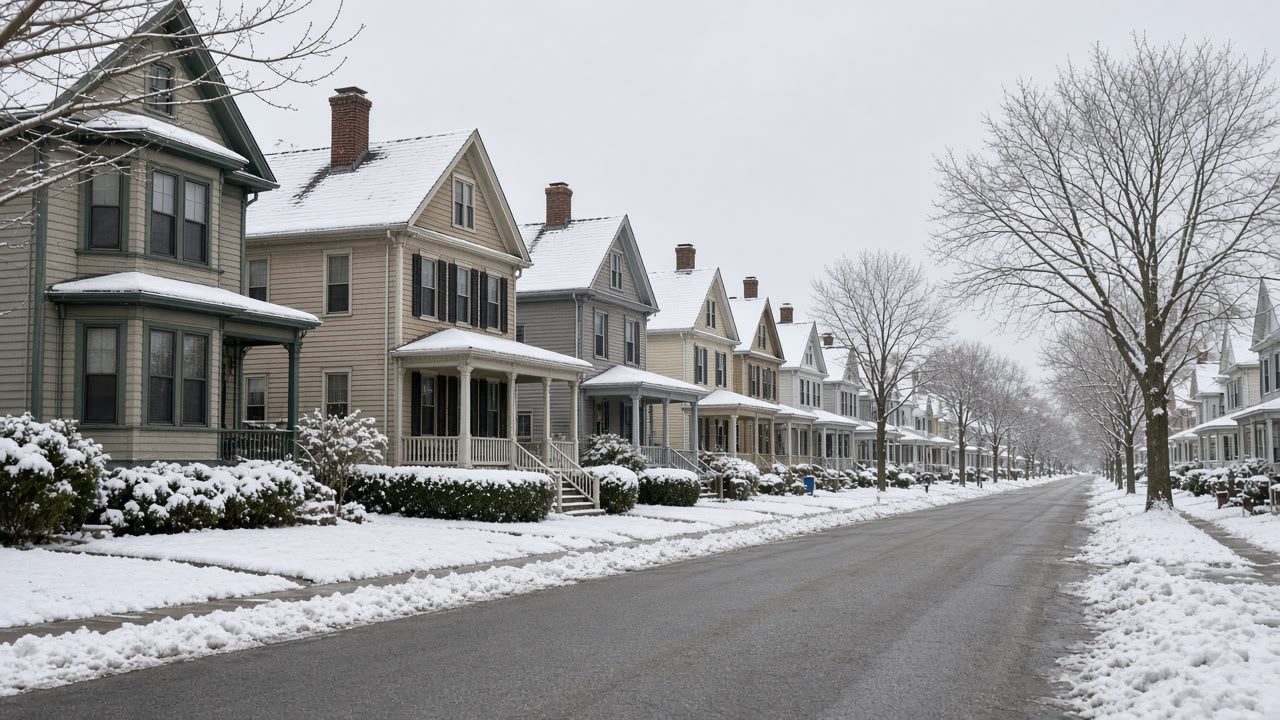
The Town of Clay has 26,282 housing units, the largest stock in Onondaga County outside the city, of which 68.0 percent are single-family detached and 71.2 percent of occupied units are owner occupied. Only 3.2 percent were built in 1939 or earlier and 45.0 percent date from 1980 or later.
Source: US Census Bureau, American Community Survey 2020-2024 5-year estimates, tables B25034 year structure built, B25035 median year structure built, B25024 units in structure and B25003 tenure, accessed 2026-09-14
In the Town of Clay the median year of construction is 1978. Of 26,282 housing units, 3.2 percent were built in 1939 or earlier, 5.6 percent before 1950, 55.0 percent before 1980 and 45.0 percent in 1980 or later. 68.0 percent are single-family detached and 71.2 percent of occupied units are owner occupied.
Source: US Census Bureau, American Community Survey 2020-2024 5-year estimates, tables B25034 year structure built, B25035 median year structure built, B25024 units in structure and B25003 tenure, accessed 2026-09-14
The 2025 Energy Conservation Construction Code of New York State requires recessed luminaires installed in the building thermal envelope to be sealed to limit air leakage between conditioned and unconditioned space, to be IC-rated and labeled as leaking not more than 2.0 cubic feet per minute when tested to ASTM E283 at a pressure difference of 1.57 pounds per square foot, and to be sealed with a gasket or caulk between the housing and the ceiling. Electrical and communication outlet boxes penetrating the air barrier must be sealed too.
Source: 2025 Energy Conservation Construction Code of New York State, via UpCodes, accessed 2026-09-14
Section R402.5.1.3 of the 2025 Energy Conservation Construction Code of New York State sets the maximum air leakage rate at 3.0 air changes per hour in Climate Zones 4 and 5, tightening to 2.5 in Zone 6, verified by test.
Source: 2025 Energy Conservation Construction Code of New York State, via UpCodes, accessed 2026-09-14
The Department of Energy's Building America Solution Center states that condensation occurs on building materials when their surface temperatures drop below the dew point of the air they are exposed to, and that in cold conditions that condensation often forms first as frost, which returns to liquid water when warmer weather arrives.
Source: US Department of Energy, Building America Solution Center, Pacific Northwest National Laboratory, accessed 2026-09-14
Newer house, frosted attic, no rain?
Send the Clay address and what you found at the hatch. We will arrange a visit that names the fault instead of quoting the covering.
Where the air gets out of a newer Clay ceiling
On a house built since 1980 the interesting number is not the age of the shingles, it is the count of holes in the ceiling below them. New York's energy code puts a leakage budget on a single recessed light fitting: not more than 2.0 cubic feet per minute when tested to ASTM E283, IC-rated and labeled, and sealed with a gasket or caulk where the housing meets the ceiling, with outlet boxes that break the air barrier sealed as well. A dozen older cans leaking well over that, plus a bath fan and a hatch, is a continuous column of warm wet air landing on the coldest surface in the house all winter. Clay has the largest housing stock in Onondaga County outside the city, 26,282 units of which 68.0 percent are single-family detached, so the same builder detail repeats down whole streets and a finding in one house is worth checking in the next. The part that helps a homeowner here is that new work in this county must prove its airtightness by test at 3.0 air changes per hour, which means a recent house that frosts up has a specific and testable defect rather than an inherent condition. Older housing was never tested at all, and that is why the same symptom means two different things on the two halves of this town.
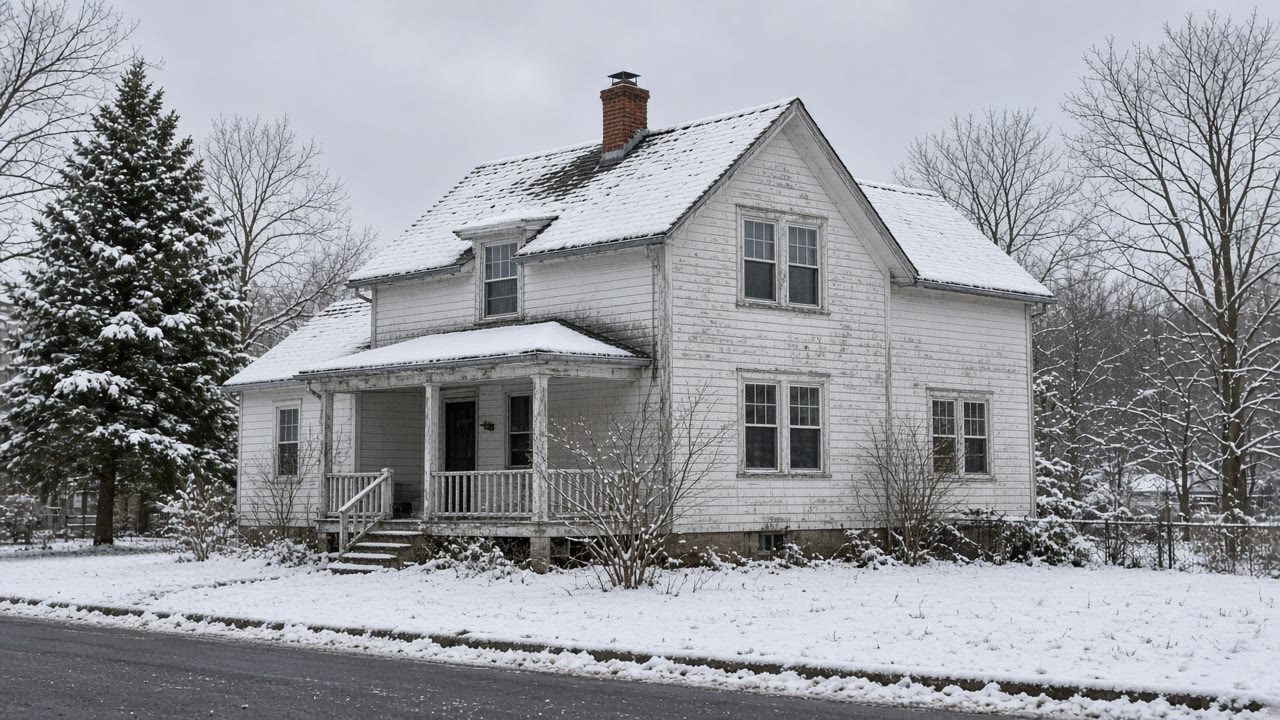
Roof system work we arrange on Clay houses
Roof and Attic Leak Diagnosis
Find out where the water is actually getting in before anyone prices a covering, including whether it came through the roof at all.
Leak Diagnosis in Clay →Flat and Low-Slope Roofing
Find out whether a nearly flat porch, addition or garage roof leaks because it has the wrong covering on it, and what may lawfully go up there instead.
Low-Slope Roofing in Clay →Flashing, Chimney and Skylight Repair
Rebuild the joint the water is actually using, at a chimney, wall, valley, vent or skylight, without re-covering a roof that is still doing its job.
Flashing Repair in Clay →Gutters, Downspouts and Roof Drainage
Get the water that leaves the roof away from the house properly, instead of over the gutter, behind the fascia or straight down the foundation wall.
Gutters and Drainage in Clay →Attic Ventilation and Air Sealing
Stop indoor air reaching the cold roof deck, and get the vent area and the vent split right, so the attic stops making its own water.
Attic Ventilation in Clay →Tell us what your Clay attic looks like at the hatch
Frost, rusty nail points, damp insulation, a mark that comes and goes. Send it and we will tell you which of those is a building fault and which is nothing at all.