
Onondaga County
Roof and Attic Leak Diagnosis in East Syracuse Village
If you live in one half of a double in East Syracuse village, the attic over your head is carrying two households' worth of winter moisture on a single roof deck. 38.4 percent of village housing sits in two-unit buildings, the highest share of any place in this metro and more than double the city's 17.5 percent, and that makes your ceiling stain a diagnosis question long before it is a roofing one.
Request a quote in East Syracuse
Share a few details so we can confirm coverage and arrange the right next step.
Would you rather talk it through? Call (315) 640-3590, answered 24/7.
$100 off your first job
Credited by us on your first booked job.
- One credit per customer per property, on your first booked job.
- Valid through December 31, 2026.
Mention this offer when you book. Full terms.
Why 38.4 percent in two-unit buildings changes the answer
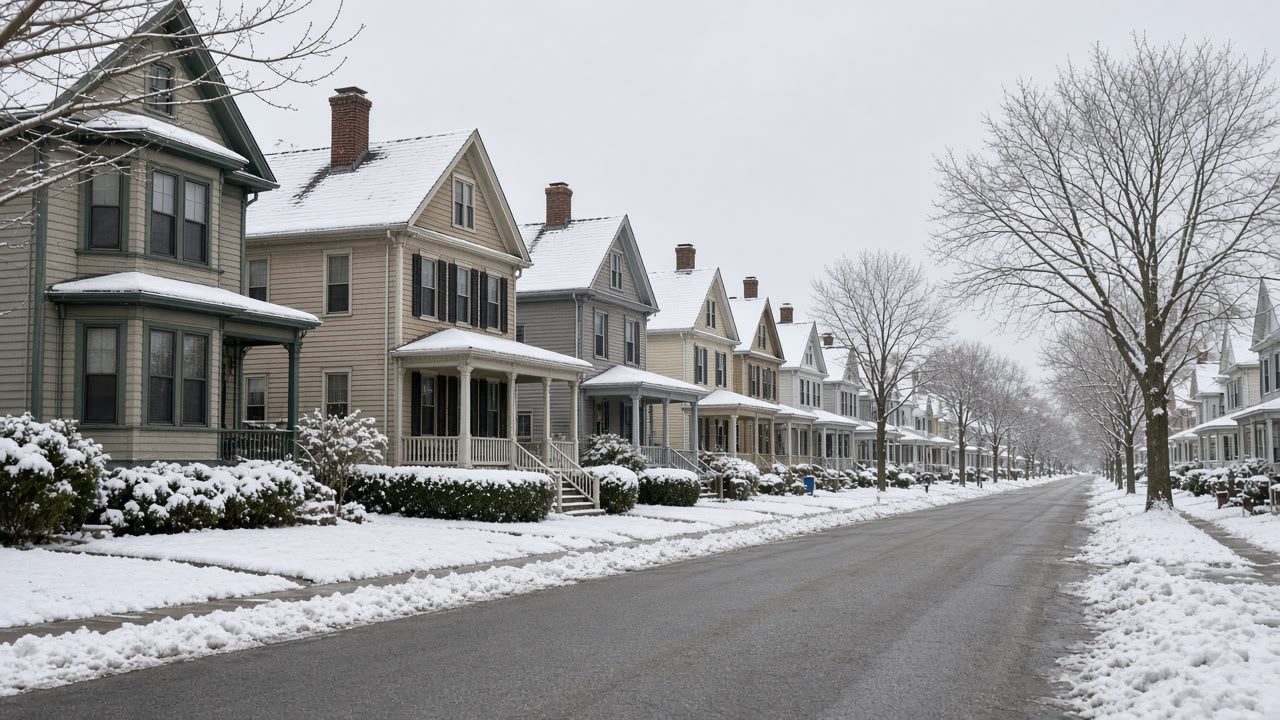
38.4 percent of housing units in East Syracuse village are in two-unit buildings, the highest share of any place in the Syracuse metro and more than double the City of Syracuse figure of 17.5 percent. Only 41.5 percent of units are single-family detached and owner occupancy is 52.7 percent. No units at all in the village were built in 2000 or later.
Source: US Census Bureau, American Community Survey 2020-2024 5-year estimates, tables B25034 year structure built, B25035 median year structure built, B25024 units in structure and B25003 tenure, accessed 2026-09-14
In East Syracuse village the median year of construction is 1938. Of 1,464 housing units, 54.0 percent were built in 1939 or earlier, 62.1 percent before 1950, 89.8 percent before 1980 and 10.2 percent in 1980 or later. 41.5 percent are single-family detached and 52.7 percent of occupied units are owner occupied.
Source: US Census Bureau, American Community Survey 2020-2024 5-year estimates, tables B25034 year structure built, B25035 median year structure built, B25024 units in structure and B25003 tenure, accessed 2026-09-14
The Department of Energy guide reports that most sources recommend an indoor relative humidity of between 30 and 50 percent during the heating season, because lowering indoor humidity lowers the dew point and so makes condensation less likely and reduces how much water is deposited when it does happen.
Source: US Department of Energy, Building America Solution Center, Pacific Northwest National Laboratory, accessed 2026-09-14
The Building America Solution Center calls the roof deck the principal condensing surface in a roof assembly, and states plainly that in a vented attic the roof deck will be cold and often below the dew point, so the two primary controls are limiting air leakage from the house into the attic and providing proper intake and exhaust ventilation.
Source: US Department of Energy, Building America Solution Center, Pacific Northwest National Laboratory, accessed 2026-09-14
Put together, two sourced numbers define the gap this site works in. The Department of Energy recommends a heating-season indoor relative humidity of 30 to 50 percent, and the NOAA 1991 to 2020 hourly normals put the Syracuse mean air temperature at 24.2F through January. A house held in the recommended band at normal room temperature has an indoor dew point in the high 30s to around 50F, while the air on the other side of the ceiling averages the mid 20s.
Source: US Department of Energy, Building America Solution Center, Pacific Northwest National Laboratory, accessed 2026-09-14
Two apartments, one attic, one stain?
Send the village address and which floor it shows on. We will arrange a visit that establishes the cause before anything is priced.
What an East Syracuse double does to one shared deck
Two kitchens, two bathrooms and two sets of laundry put twice the water into the air of a building with one roof over it, and all of it arrives at the same cold sheathing. The Department of Energy recommends holding indoor relative humidity between 30 and 50 percent through the heating season, because a lower indoor dew point deposits less water when a surface does go cold, and in a double you only control your own half of that. So a diagnosis in East Syracuse village usually has to consider both units, or at least ask what the other one runs its thermostat, its shower and its dryer at. The village fabric makes that more likely rather than less: the median build year here is 1938, 54.0 percent of the 1,464 units were standing before 1940, and the Census records no units at all built in the village in 2000 or later, so there is no modern stock on the street to compare yours against. A ten dollar hygrometer on each floor is the cheapest evidence anybody can bring to this, and we would rather you had it before we arrive.
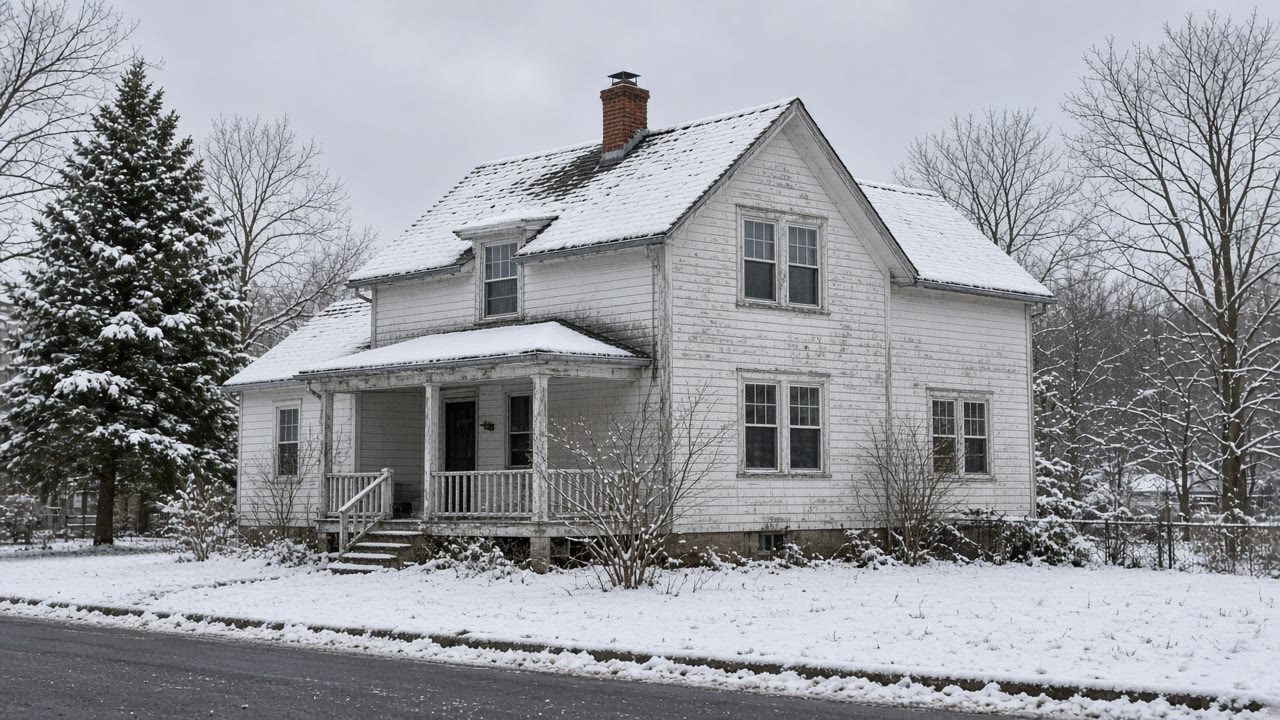
Work we arrange on East Syracuse doubles and singles
Roof and Attic Leak Diagnosis
Find out where the water is actually getting in before anyone prices a covering, including whether it came through the roof at all.
Leak Diagnosis in East Syracuse →Flat and Low-Slope Roofing
Find out whether a nearly flat porch, addition or garage roof leaks because it has the wrong covering on it, and what may lawfully go up there instead.
Low-Slope Roofing in East Syracuse →Flashing, Chimney and Skylight Repair
Rebuild the joint the water is actually using, at a chimney, wall, valley, vent or skylight, without re-covering a roof that is still doing its job.
Flashing Repair in East Syracuse →Gutters, Downspouts and Roof Drainage
Get the water that leaves the roof away from the house properly, instead of over the gutter, behind the fascia or straight down the foundation wall.
Gutters and Drainage in East Syracuse →Attic Ventilation and Air Sealing
Stop indoor air reaching the cold roof deck, and get the vent area and the vent split right, so the attic stops making its own water.
Attic Ventilation in East Syracuse →Tell us what the ceiling in your East Syracuse unit is doing
When it appears, whether it rained, and what the other unit heats to. If it turns out to be moisture rather than a leak, that is a cheaper fix and you will hear it from us.