
Roof to Wall Flashing Repair in East Syracuse Village
At the bottom of every roof to wall run there should be one small bent piece of metal, and its absence is the most common leak nobody sees.
Flashing Repair quote in East Syracuse
Share a few details so we can confirm coverage and arrange the right next step.
Would you rather talk it through? Call (315) 640-3590, answered 24/7.
$100 off your first job
Credited by us on your first booked job.
- One credit per customer per property, on your first booked job.
- Valid through December 31, 2026.
Mention this offer when you book. Full terms.
The piece of metal missing at the bottom of the run
Look at the point where a roof slope dies into a wall, right at the bottom. Federal guidance calls for step and kick-out flashing at every roof to wall intersection, with step pieces reaching at least 4 inches up the wall and 4 inches out along the deck, lapped like shingles and tied into the wall drainage plane above, and it asks for the siding to stop at least one inch clear of the roof surface. It also notes that site-made diverters are frequently undersized or have unsealed seams. East Syracuse village has had a long time to accumulate that fault: the Census records no units at all built here in 2000 or later, and 89.8 percent of the stock was up before 1980, so essentially every one of these junctions is at least a generation old.
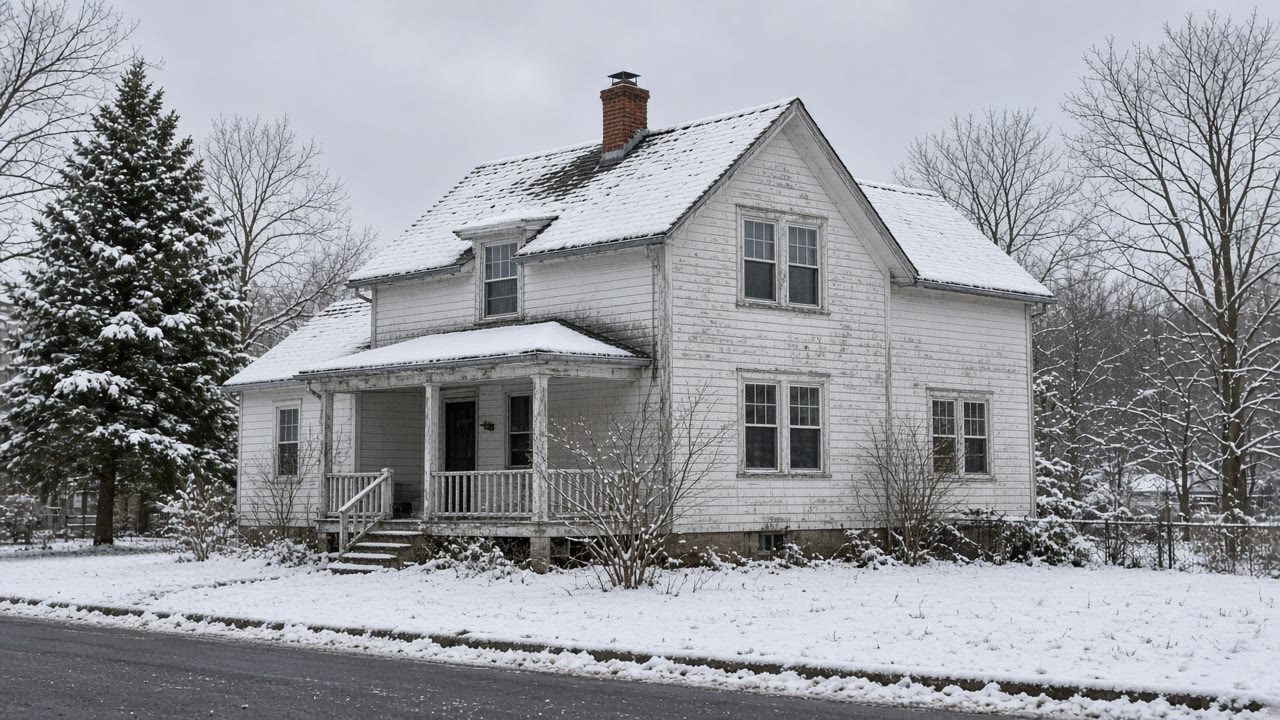
What flashing repair involves
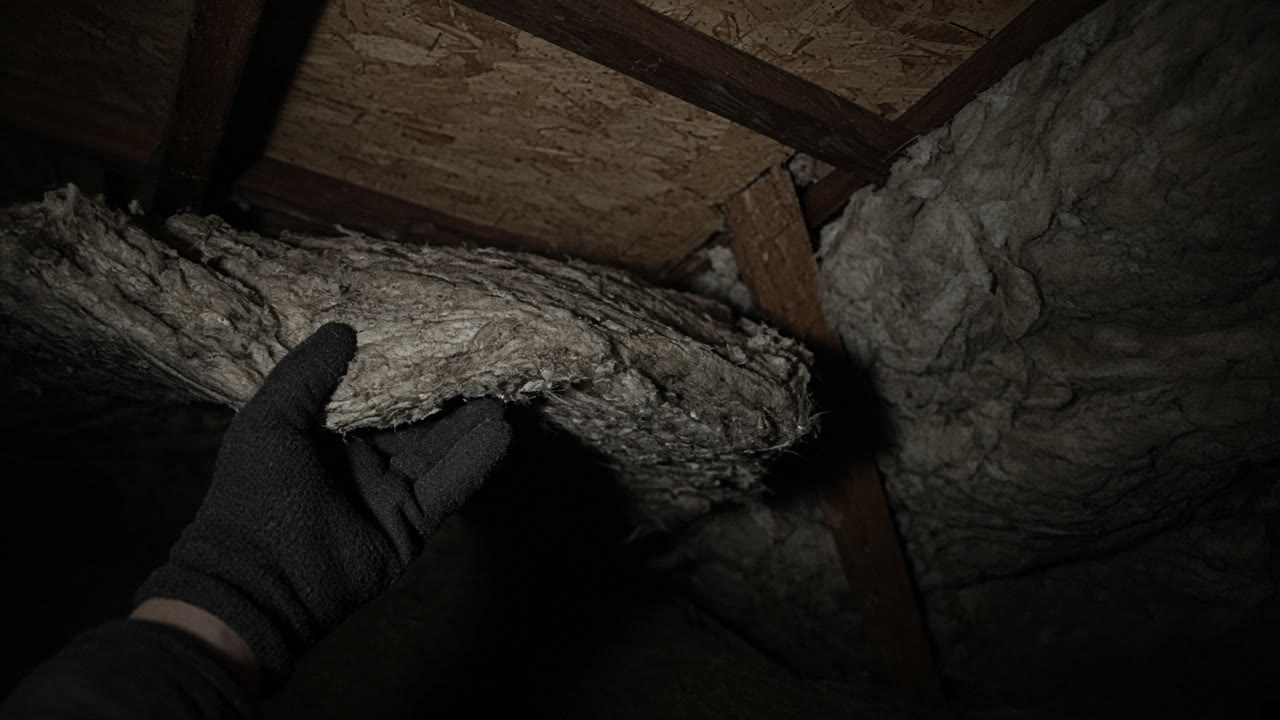
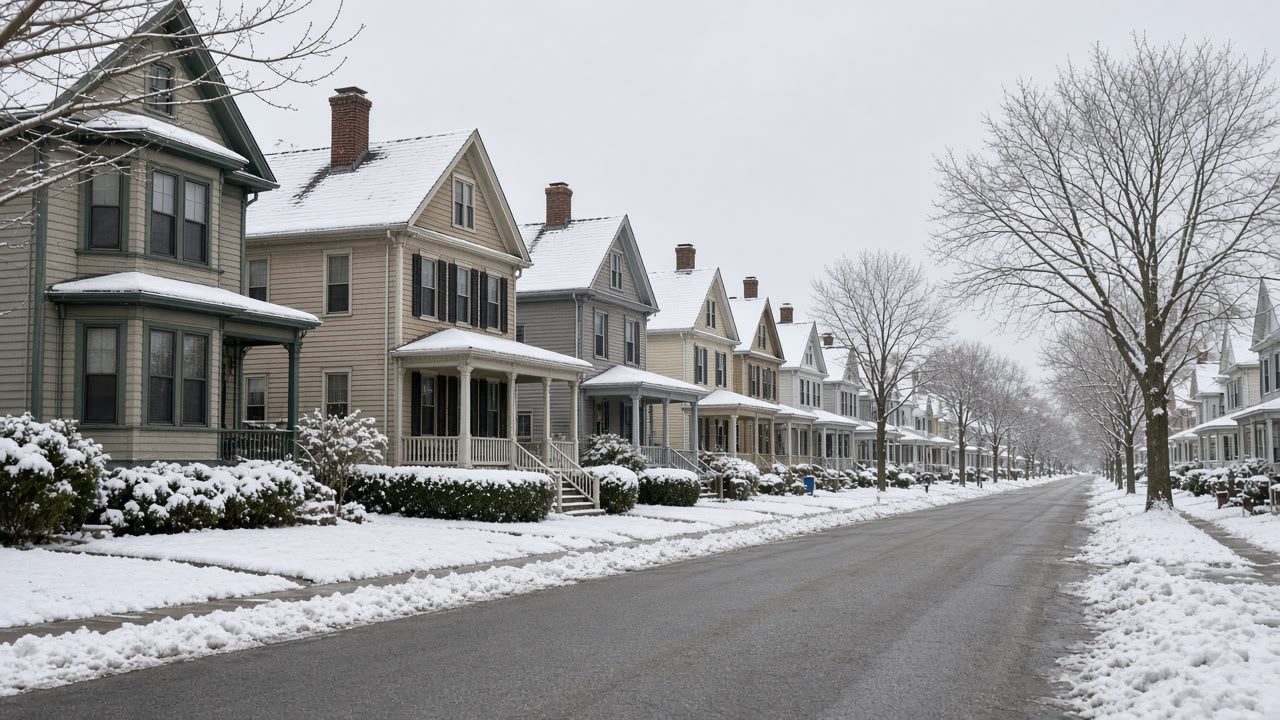
Checking your own roof to wall joints from the ground
You can do most of this from the driveway with no ladder at all. Find every place a roof runs into a wall, then look at the very bottom of the run for a piece of metal that turns outward over the gutter. If there is none, the water from that whole slope is being delivered into the wall cladding at one point. Then look at the gap between the bottom edge of the siding and the roof surface: siding sitting flat on the shingles wicks water straight into the wall behind it. Neither of those is a covering problem, and neither is expensive to correct compared with what they cost when left.
Look for the turn-out at the bottom
One bent piece of metal at the foot of a roof to wall run sends the water into the gutter. Where it is missing, that whole slope drains into the cladding.
Check the gap under the siding
The guidance asks for siding to finish at least an inch above the roof. Boards resting on the shingles hold water against the wall every time it rains.
Be careful with homemade diverters
A folded scrap of aluminum is common and frequently too small or unsealed at the seam. A properly sized piece costs little more and actually carries the flow.
Why every village roof to wall joint is at least a generation old
38.4 percent of housing units in East Syracuse village are in two-unit buildings, the highest share of any place in the Syracuse metro and more than double the City of Syracuse figure of 17.5 percent. Only 41.5 percent of units are single-family detached and owner occupancy is 52.7 percent. No units at all in the village were built in 2000 or later.
Source: US Census Bureau, American Community Survey 2020-2024 5-year estimates, tables B25034 year structure built, B25035 median year structure built, B25024 units in structure and B25003 tenure, accessed 2026-09-14
The Department of Energy guide directs that step and kick-out flashing be installed at all roof-wall intersections and boot or collar flashing at all roof penetrations, that step flashing extend at least 4 inches up the wall and 4 inches out along the roof deck, that the pieces be lapped shingle fashion and integrated with the wall drainage plane above, that siding end at least one inch above the roof surface, and that the kick-out at the lower end of the intersection be large enough for the expected flow. It notes that site-made diverters are often undersized or have unsealed seams.
Source: US Department of Energy, Building America Solution Center, Pacific Northwest National Laboratory, accessed 2026-09-14
In East Syracuse village the median year of construction is 1938. Of 1,464 housing units, 54.0 percent were built in 1939 or earlier, 62.1 percent before 1950, 89.8 percent before 1980 and 10.2 percent in 1980 or later. 41.5 percent are single-family detached and 52.7 percent of occupied units are owner occupied.
Source: US Census Bureau, American Community Survey 2020-2024 5-year estimates, tables B25034 year structure built, B25035 median year structure built, B25024 units in structure and B25003 tenure, accessed 2026-09-14
Photograph where the roof meets the wall
The bottom of the run is the part that matters. We arrange an insured contractor who rebuilds the detail rather than sealing it.
Roof to wall questions from East Syracuse homeowners
There is no stain inside. Can the wall still be wet?
Yes, and that is the awkward part of this detail. Water entering at a roof to wall joint runs down inside the cladding and can soak sheathing and framing for a long time before anything shows on a ceiling. If the metal is absent at the bottom of the run, it is worth opening a small area to look rather than waiting for a mark to appear.
Can this be fixed without taking the siding off?
Partly, and it depends how the wall was built. The vertical leg of the flashing belongs behind the cladding, so a proper repair usually means releasing a course or two of siding at that junction. A piece screwed on the outside and sealed is the version that comes back, and it is worth knowing which one you are being quoted.
Get the wall junction looked at properly
Send the village address and what you can see from the ground. No obligation, and this is usually a small piece of work.