
Finding a Roof Leak in Winter
Finding it is a winter job. Winter is the only time of year when the commonest cause of a Syracuse ceiling stain leaves visible evidence, and most of that evidence is inside the attic rather than out on the roof. What can be repaired in the cold is narrower than what can be found, but you should not spend four months not knowing which one you have.
Already know you need someone out? Call (315) 640-3590, answered 24/7.
What a cold weather visit settles, in order
The calendar, before anyone arrives
YouThe dates the ceiling changed, set against what fell those days. About twelve days in a normal January record nothing measurable at all.
The attic, on a cold morning
The contractorFrost on the underside of the boards is the evidence that only exists in winter. By April it has thawed, soaked in and gone.
Readings rather than opinions
The contractor, with a moisture meterThe wet area gets mapped on the deck, the framing and the ceiling, so the size of the problem is a measurement.
The verdict and a written proposal
The contractor, for the work it intends to carry outEither the cause is outside at a joint, or it is indoor air reaching the deck. The proposal prices that specific repair.
What gets done now and what waits for weather
You, decidingInterior air sealing, baffles and venting are cold weather work. Anything that means opening courses of shingles usually is not.
Evidence and timings from the Department of Energy's cold-weather condensation guidance, the Environmental Protection Agency's moisture guidance and the NOAA 1991 to 2020 normals for Hancock International.
Most of the evidence is inside, and January is when it is there
A cold morning is the right time to look at the underside of a roof deck, because that is when the problem is still on the boards. The Department of Energy describes how it works: condensation forms when a surface drops below the dew point of the air touching it, and in cold conditions it forms first as frost, which turns back into liquid water when warmer weather arrives. Frost on the sheathing is visible, photographable evidence, and it exists in February and not in May. By spring it has thawed, run down into the insulation and left a stain that could have come from anything. If your ceiling is marking now, now is when someone should be looking at it, and the place they should be looking is the attic, not the roof.
The test that needs no ladder and no appointment
Write down the day the ceiling changed and check what fell that day. The NOAA 1991 to 2020 normals for Hancock International give a normal January 19.1 days with at least a hundredth of an inch of precipitation and only 7.2 days with a tenth of an inch or more, so roughly twelve days in the month record nothing measurable at all and about twenty-four record less than a tenth. A mark that appears or grows on one of those days did not come through the covering, because nothing landed on it. That single observation reorders the whole job: it moves the work from the roof to the ceiling plane, which is the half of it that can be done in any weather, and it saves you from buying a covering in March to stop something a covering was never going to stop.
How long the cold actually lasts here, counted properly
It helps to know the size of the exposure rather than arguing about whether this winter is a bad one. The NOAA hourly normals for Hancock International put the temperature at or below 32F for 2,220 hours a year, a quarter of the year, and at or below 40F for 3,263 hours, which is 37 percent of it. The annual normals add 57.5 nights with a low at or below 20F, 23.6 nights at or below 10F and 7.1 nights at or below 0F. Frost builds on the deck on the severe nights and then thaws, so roughly two dozen hard nights a year is why an attic can be dry in November and dripping in February with nothing at all having changed on the roof. Waiting for spring means waiting through most of that.
An open attic is the easiest place in the house to diagnose
What can be established in cold weather depends mostly on how your roof is built, and the common case here is the good one. The Department of Energy observes that a vented attic insulated at the attic floor makes it easier to find and solve roof leaks and other moisture problems, because the exposed rafters and decking dry more readily and the underside of the deck is relatively easy to look at. Compare that with a deck encased in spray foam or a cathedral ceiling with no cavity to see into, where the evidence is sealed away and the work has to proceed from outside in. So the first question on a winter call is not what the weather is doing. It is whether there is an attic to get into, and what is between you and the boards.
A meter settles what an opinion argues about
The difference between a useful winter visit and a wasted one is whether anything gets measured. The Environmental Protection Agency notes that some moisture problems are not easy to see, names concealed spaces such as pipe chases as common sites of hidden growth, and describes moisture meters, which read the moisture content of building materials through a probe or against the surface, as the usual way investigators locate hidden wet areas. On a roof problem that means readings taken across the deck, the framing and the ceiling below, so the wet area is mapped rather than described. It also means the answer to where is this coming from is a set of numbers you can see, which is exactly what a homeowner who has already paid for one failed repair is entitled to ask for.
Two days, which is why waiting is not free
The reason not to sit on this until April is a clock rather than a scare. The Environmental Protection Agency's mold course states that it is important to dry items quickly and that in most cases items dried within 24 to 48 hours will not become moldy. A slow winter drip never gets its two days, because it rewets the same insulation on every cold night. The same agency adds that humidity alone can supply enough moisture, that indoor relative humidity should be kept below 60 percent and ideally between 30 and 50, and that mold is frequently found on cold surfaces where condensation forms. So the water that keeps arriving on a cold deck is not only a water problem after a few weeks of it, and a wet ceiling in December that is still wet in March has had the whole winter.
What the deck is made of changes how urgent this is
Two houses with the same drip can be on very different timetables, and the difference is the boards. The Department of Energy advises using roof assembly materials that can safely store water, naming solid wood, treated cellulose and plywood, and warns that oriented strand board is more easily damaged by moisture, while fiberglass and foams have little or no storage capacity and can concentrate moisture on more sensitive materials in the assembly. In practice a plank deck from the 1920s can absorb a wet spell and dry out again, and a strand board deck from the 1990s swells and comes apart. That is a real answer to how long can this wait, and it is a reason to have someone look at the deck now even if the repair itself is going to happen later.
Which repairs genuinely wait for weather, and which do not
Plenty of this work is indoor work. Air sealing at the ceiling plane, baffles at the eaves, boxing and sealing a hatch, ducting a bath fan properly and correcting a short-circuited vent arrangement are all done from inside the attic in any weather, and they are the cause side of a condensation problem. What waits is generally anything that means opening the covering. Section R905.2.8.2 of the 2025 Residential Code of New York State requires valley linings to be installed before the shingles, so a valley cannot be relined without lifting the courses beside it. And section R905.2.8.4 hands soil stack, vent pipe and chimney flashing entirely to the shingle manufacturer's printed instructions, which is where any condition attached to that product lives. The honest answer on a cold day is to ask which product is up there and what its instructions require.
If there is no way into the attic at all
Some houses cannot be looked at, and that is a finding in itself rather than a dead end. Section R807.1 of the 2025 Residential Code of New York State requires an attic access opening where an attic with combustible ceiling or roof construction runs 30 inches or more high over an area of not less than 30 square feet, with a rough opening of at least 22 by 30 inches in a hallway or other readily accessible place. Where a house of that shape has no hatch, nobody has ever seen the underside of the deck, and the first job is a small piece of carpentry rather than anything on the roof. It is minor work and it changes every future roof question in the house from guesswork into looking, which is worth more over twenty years than any single repair.
What a winter visit produces, and what it does not
Worth being plain about what is on the table. A visit here is a diagnostic one: somebody looks at the ceiling, gets into the attic where there is a way in, takes moisture readings across the deck, the framing and the ceiling below, and works out where the water is entering. What you get afterwards is a written proposal for the repair the contractor intends to carry out, priced, naming the cause. What you do not get from us is a written verdict on the overall state of your house, which is a separate regulated job in New York and a different profession. The useful consequence for you is that the proposal has to name one specific thing and price fixing it. If the finding is that the covering is sound and the ceiling plane needs sealing, that is what it will say, and if nothing up there is wet at all it will say that too.
Sources used in this guide
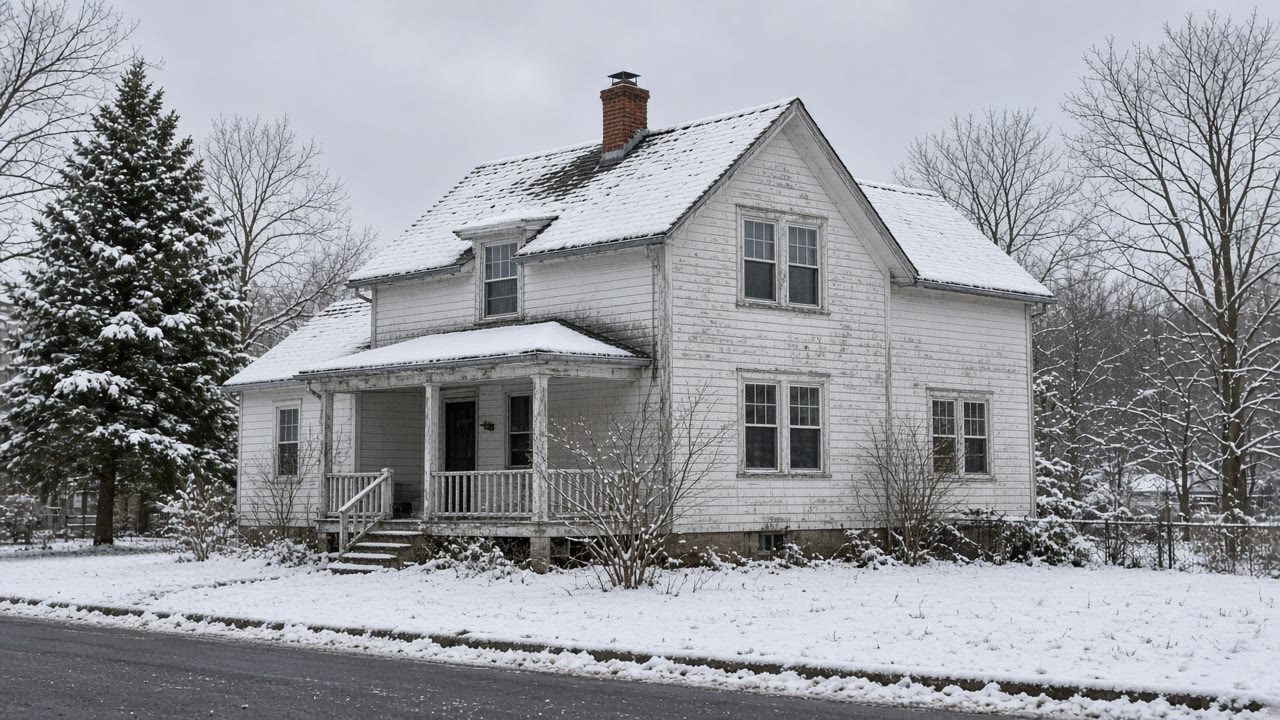
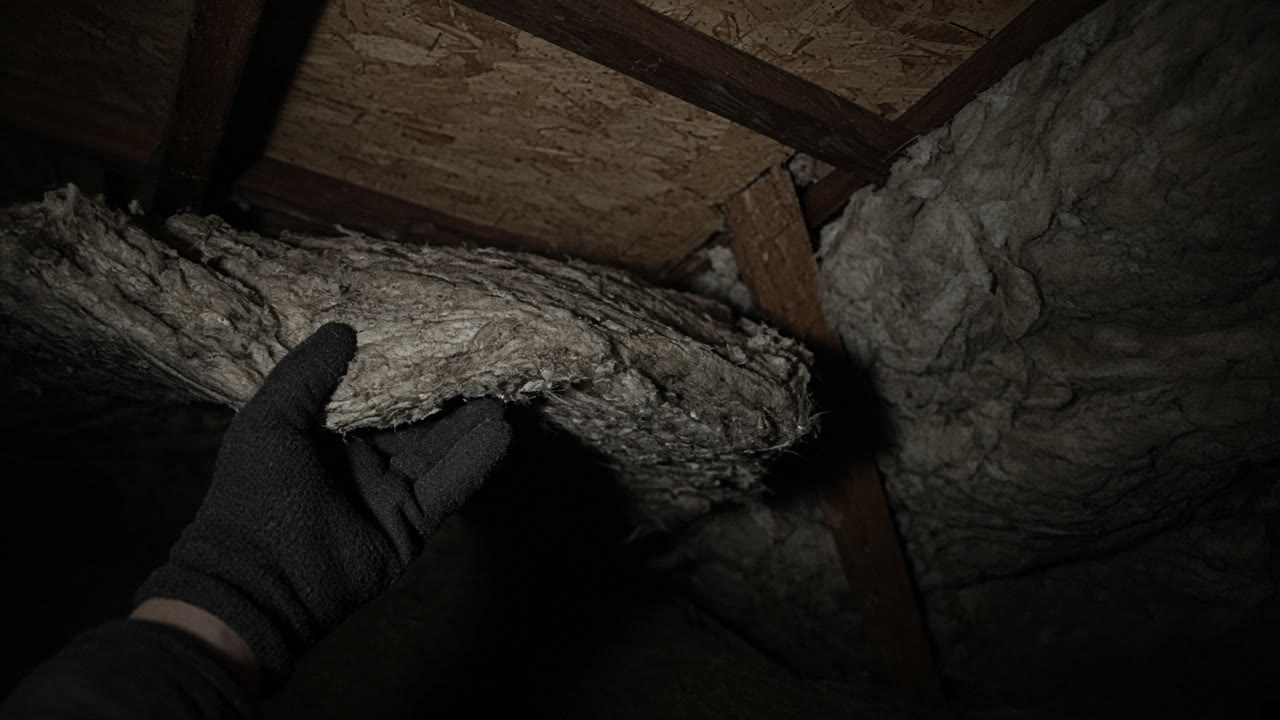
The Department of Energy guide observes that a vented attic insulated at the attic floor makes it easier to find and solve roof leaks and other moisture problems, because the exposed and ventilated rafters and decking can dry out more readily and the underside of the deck is relatively easy to look at, compared with an assembly where the deck is encased in spray foam or sandwiched in a cathedral ceiling.
Source: US Department of Energy, Building America Solution Center, Pacific Northwest National Laboratory, accessed 2026-09-14
The Department of Energy's Building America Solution Center states that condensation occurs on building materials when their surface temperatures drop below the dew point of the air they are exposed to, and that in cold conditions that condensation often forms first as frost, which returns to liquid water when warmer weather arrives.
Source: US Department of Energy, Building America Solution Center, Pacific Northwest National Laboratory, accessed 2026-09-14
The NOAA 1991 to 2020 annual normals for Hancock International record 57.5 nights a year with a low at or below 20F, 23.6 nights at or below 10F and 7.1 nights at or below 0F.
Source: NOAA National Centers for Environmental Information, accessed 2026-09-14
The NOAA 1991 to 2020 monthly normals for Hancock International give January 19.1 days with at least a hundredth of an inch of precipitation and only 7.2 days with a tenth of an inch or more. February runs 16.0 days and 6.3 days. So in a normal January about twelve days record no measurable precipitation at all and about twenty-four record less than a tenth of an inch.
Source: NOAA National Centers for Environmental Information, accessed 2026-09-14
The NOAA 1991 to 2020 hourly normals for Hancock International put the normal temperature at or below 32F for 2,220 hours a year, a quarter of the year, and at or below 40F for 3,263 hours, 37 percent of the year.
Source: NOAA National Centers for Environmental Information, accessed 2026-09-14
The Environmental Protection Agency notes that some moisture problems are not easy to see, names pipe chases and utility tunnels as common sites of hidden growth, and describes moisture meters, which read the moisture content of building materials through a probe or against the surface, as the usual way investigators locate hidden wet areas.
Source: US Environmental Protection Agency, accessed 2026-09-14
The Environmental Protection Agency's mold course states that it is important to dry items quickly to prevent mold growth and that in most cases items dried within 24 to 48 hours will not become moldy.
Source: US Environmental Protection Agency, accessed 2026-09-14
The Environmental Protection Agency states that humidity or dampness in the air alone can supply enough moisture for mold growth, that indoor relative humidity should be kept below 60 percent and ideally between 30 and 50 percent, and that mold is frequently found on walls in cold corners behind furniture where condensation forms.
Source: US Environmental Protection Agency, accessed 2026-09-14
The Department of Energy guide advises using roof assembly materials that can safely store water, naming solid wood, treated cellulose and plywood, and warns that oriented strand board is more easily damaged by moisture while fiberglass and foams have little or no moisture storage capacity and can concentrate moisture on more sensitive materials in the assembly.
Source: US Department of Energy, Building America Solution Center, Pacific Northwest National Laboratory, accessed 2026-09-14
Section R905.2.8.4 of the 2025 Residential Code of New York State does not set dimensions for soil stack, vent pipe and chimney flashing. It requires instead that they be applied in accordance with the asphalt shingle manufacturer's printed instructions, and R905.2.8 makes the whole flashing section subject to those instructions.
Source: 2025 Residential Code of New York State, via UpCodes, accessed 2026-09-14
Section R905.2.8.2 of the 2025 Residential Code of New York State requires valley linings to be installed before the shingles go on, and sets minimum widths by valley type: open valleys lined with metal not less than 24 inches wide, open valleys of two plies of mineral-surfaced roll roofing with an 18 inch bottom layer and a top layer not less than 36 inches, and closed valleys lined with one ply of smooth roll roofing not less than 36 inches wide, or a self-adhering polymer-modified bitumen underlayment in place of the lining.
Source: 2025 Residential Code of New York State, via UpCodes, accessed 2026-09-14
Section R807.1 of the 2025 Residential Code of New York State requires an attic access opening where an attic with combustible ceiling or roof construction has a vertical height of 30 inches or more over an area of not less than 30 square feet, with a rough-framed opening of not less than 22 inches by 30 inches in a hallway or other readily accessible location.
Source: 2025 Residential Code of New York State, via UpCodes, accessed 2026-09-14
The Department of Energy guide reports that most sources recommend an indoor relative humidity of between 30 and 50 percent during the heating season, because lowering indoor humidity lowers the dew point and so makes condensation less likely and reduces how much water is deposited when it does happen.
Source: US Department of Energy, Building America Solution Center, Pacific Northwest National Laboratory, accessed 2026-09-14
The NOAA 1991 to 2020 monthly normals for Hancock International give mean temperatures of 29.4F in December, 23.6F in January and 25.9F in February, an average of 26.3F across the three coldest months. Normal January highs and lows are 31.5F and 15.7F.
Source: NOAA National Centers for Environmental Information, accessed 2026-09-14
Services this guide relates to
Need someone to look at it?
Send the details and we will come back to you.