
Syracuse and the surrounding Onondaga County area
Roof and Attic Leak Diagnosis in Syracuse and Onondaga County
Find out where the water is actually getting in before anyone prices a covering, including whether it came through the roof at all.
Leak Diagnosis quote
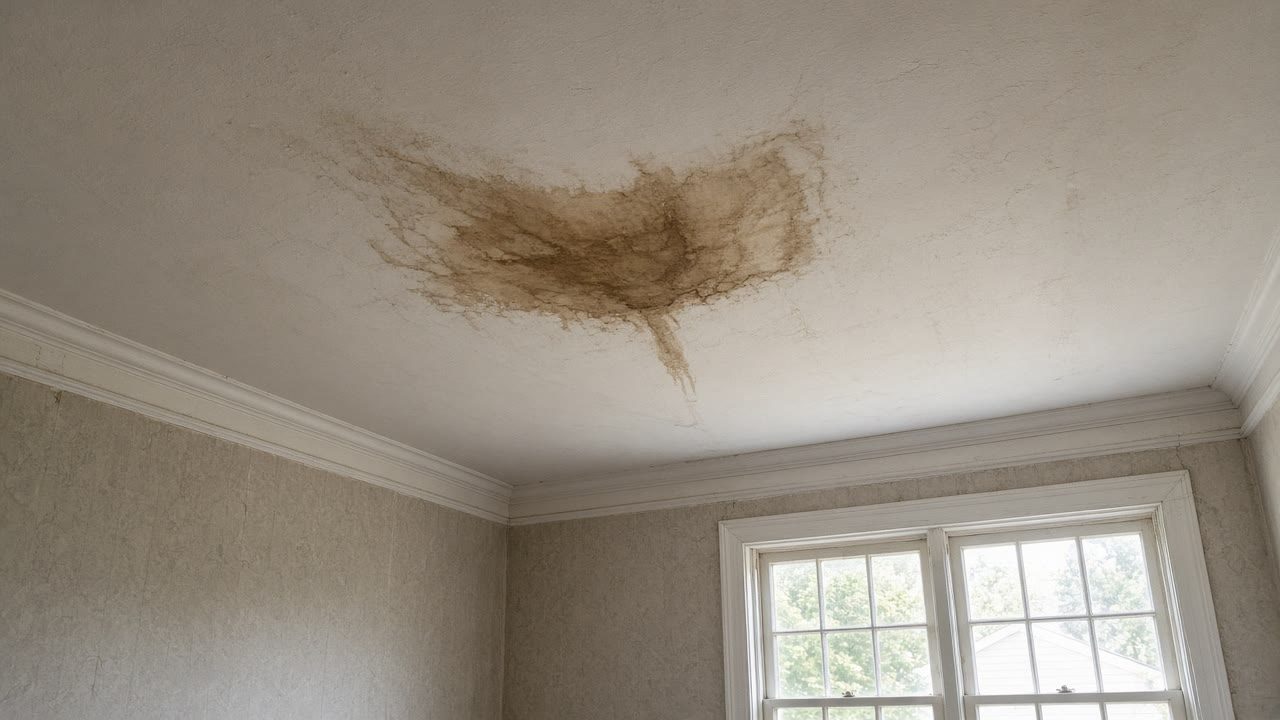
Tell us where the stain is and what the weather was doing when it appeared, and we will put you in front of insured contractors who find the entry point before anyone prices a covering. If the answer turns out to be your attic, we would rather you heard that.
Would you rather talk it through? Call (315) 640-3590, answered 24/7.
$100 off your first job
Credited by us on your first booked job.
- One credit per customer per property, on your first booked job.
- Valid through December 31, 2026.
Mention this offer when you book. Full terms.
What a diagnostic visit is looking for
You have a brown ring on a ceiling and no idea whether it is still growing, whether it matters, or whether the person you call is going to price a whole roof off the back of it. This service answers the first question and only the first question: where is the water getting in. It starts inside, with the stain and the attic above it, because water runs along the underside of the deck before it drops and the wet plaster is rarely under the hole. It ends with a written proposal for the repair the contractor intends to carry out, naming the entry point. There is a second possible answer and the visit is set up to find that one too. The Department of Energy's Building America Solution Center states that condensation forms on a building surface once that surface falls below the dew point of the air it is exposed to, and in a Syracuse January the coldest surface in the house is the underside of the roof deck. A ceiling that marks up after a cold, dry night is that, and it is not a roof leak.
- Tracing an active leak from the stain inside back to an entry point uphill of it
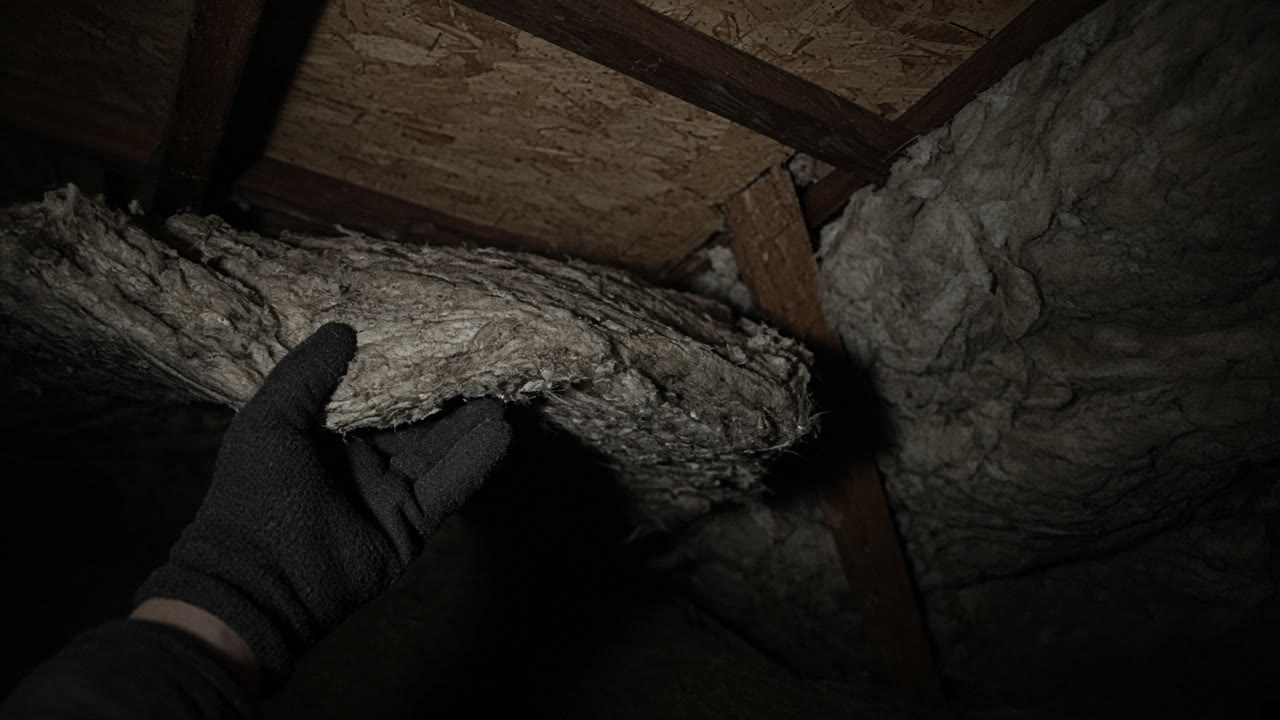
- Attic examination at the hatch: frost on the deck, rusted nail points, stained rafters and flattened insulation
- Telling condensation apart from a leak by establishing what the weather did on the day it appeared
- Moisture meter readings on drywall, plaster, framing and insulation, to find wet material that is not yet visible
- Water testing a suspected joint from above, one section at a time, with somebody watching from inside
- Checking every penetration on the slope above the stain: chimney, sidewall, valley, plumbing vent, bath fan hood, skylight
- Establishing whether a low-slope porch, dormer or addition roof is the source rather than the main slope
- Looking for a bath fan or a dryer duct discharging into the attic instead of outdoors
- Reading what the deck is made of, because plank, plywood and strand board tolerate being wet very differently
- A written repair proposal naming the entry point and the work needed to close it
- A second opinion where a full covering has been quoted for a single stain
What decides how hard a leak is to find
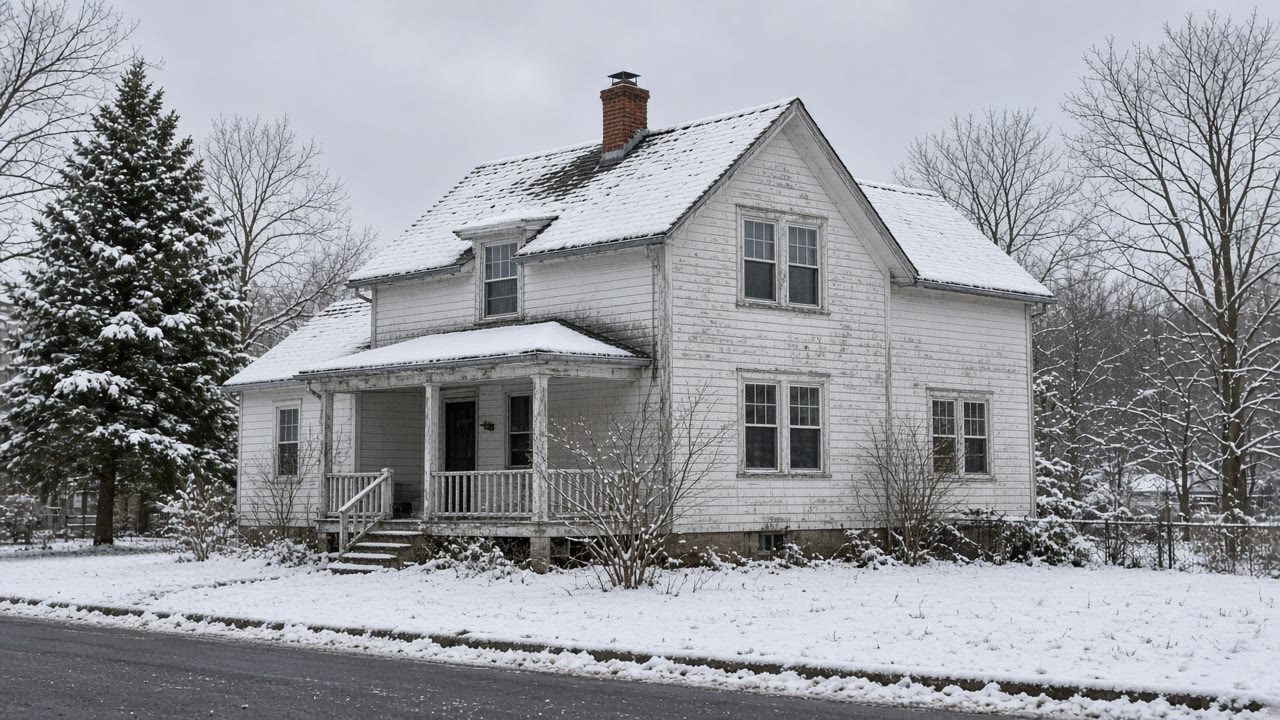
Two houses with the same stain can be a twenty minute answer and a two visit answer. These are what decide which one you have, and most of them are settled before anyone gets on a ladder.
Whether it happens when it rains, or when it turns cold
This one question splits the whole job in two and it costs nothing to answer. The NOAA 1991 to 2020 normals for Hancock International record 19.1 January days with at least a hundredth of an inch of precipitation and only 7.2 days with a tenth or more, so about twelve days in a normal January get nothing measurable at all. If the stain grew on one of those days, nothing landed on the house that could have got in, and the search moves to the attic.
How easy the underside of the deck is to look at
In an open attic insulated at the floor, the evidence is usually there at the hatch. The Department of Energy notes that this arrangement makes moisture problems easier to find and solve, because the rafters and decking are exposed, can dry out, and are relatively easy to look at. A deck encased in spray foam, or a cathedral ceiling with no cavity to enter, hides the same evidence, and then the work has to proceed from the outside in. That changes what a first visit can settle.
Whether the house has an attic hatch at all
Section R807.1 of the 2025 Residential Code of New York State requires an access opening where an attic with combustible construction has 30 inches of height over an area of at least 30 square feet, rough framed not less than 22 inches by 30 inches somewhere readily accessible. Plenty of older houses here have none. If yours does not, nobody has ever seen the underside of your deck, and cutting a code sized opening is minor work that turns every future roof question from an opinion into a look.
What the roof deck is made of
It changes how urgent this is. The Department of Energy warns that oriented strand board is more easily damaged by moisture, while solid wood and plywood can store water safely and give it back, and that fiberglass and foams have little or no storage capacity. A 1920s plank deck can take a wet spell and dry out. A strand board deck delaminates, and there the right answer is work booked rather than a winter spent watching.
How long the ceiling has already been wet
The Environmental Protection Agency states that in most cases items dried within 24 to 48 hours will not become moldy. That is the clock, and it is why a slow drip wetting the same square foot on every cold night is a worse problem than one heavy storm leak that dried out afterward. It also decides whether a second trade needs to be involved in what happens after the roof work.
Where the stain sits in the room
A band running a foot or two inside an outside wall, parallel to it, is a different finding from a patch in the middle of a ceiling. The Department of Energy notes that insulation at attic eaves is often compressed or insufficient because standard trusses are narrow there, and that in winter this produces cold spots along ceilings. That pattern points above the wall top plate, and the repair for it is inside the attic.
Whether it only does it in July
Condensation is not only a winter finding. The NOAA hourly normals put the mean July dew point here at 60.7F, so anything in the building held below about 61 degrees through July pulls water out of ordinary summer air. Uninsulated cooling ductwork and an air handler sitting in a hot attic do exactly that, and a summer drip on a ceiling near one of them is usually that rather than the roof.
Whether anyone can get to the rooms that matter
A diagnosis needs the top floor, the attic hatch and sometimes the basement, and in this county that is not always one person's decision. Only 63.7 percent of housing units in Onondaga County are single family detached, running from 94.1 percent in the Town of Pompey down to 41.4 percent in the city of Syracuse. On a double or an upper flat the visit has to be arranged rather than assumed, so it is worth saying so when you make contact.
Not sure whether this is the roof or the attic?
One question settles most of it: did it get worse when it rained, or after a cold night?
How a leak actually gets found
Say what the weather was doing when it appeared
Rain, wind driven rain, a thaw, or a cold clear night with nothing falling. Those four send the visit in different directions and it costs you nothing to name one. Add whether it has done this before, and whether anybody has already worked on it.
The request goes to a contractor who covers the address
Matching is by property rather than by person, because a ZIP code routes a request to a town and a street address routes it to a house. The contractors are insured. What is worth asking whoever arrives is what they intend to look at, and in what order, because a diagnosis has a sequence and a sales call does not.
The inside gets read first
Water gets in at a joint or an edge, travels the underside of the deck or down a rafter until something stops it, then falls, so the wet plaster is evidence of where it landed. Meter readings across the ceiling and the wall below show how far the wet material runs past what you can see, which the Environmental Protection Agency describes as the usual way investigators locate hidden wet areas.
Then the attic, with a flashlight
Frost or dark staining on the underside of the deck, rust on the nail points, daylight at a flashing, insulation gone flat, a flex duct ending in the insulation. Ten minutes at the hatch answers questions that take an hour on the roof, and it is where the condensation answer either shows up or does not.
The slope above the stain is worked through joint by joint
Chimney, sidewall, valley, plumbing vent, bath fan hood, skylight, and the low-slope section if there is one. Section R903.2.1 of the 2025 Residential Code of New York State requires flashing at wall and roof intersections, at every change in slope or direction, and around roof openings, which is a list of the places somebody had to make a decision. The field of shingles between them is a simple overlapping surface.
A suspect joint gets water put on it
One section at a time, from the bottom upward, with somebody watching inside. It is slow, and it is the only way to prove an entry point rather than nominate one. It is also the step that separates a finding from a theory, which is the whole reason to pay for this visit.
You are told what it is, in writing, with what the repair involves
A proposal for the work the contractor intends to carry out, naming the entry point and the scope. If the finding is condensation, it says so and the work is attic work. If the finding is that the covering has reached the end, it says that too. This operation is paid when work is booked and quoted, not for selling a covering, which is why it can afford the answer that costs you less.
What leak diagnosis looks like

Where a leak diagnosis starts and stops
When you may not need this at all
- If the stain appeared or grew on a cold night when nothing fell on the house, you probably do not have a roof leak. About twelve days in a normal January here record no measurable precipitation at all, and nothing gets in through a roof on a day nothing landed on it. That is an attic question and a new covering will not change it.
- If a bath fan or a dryer duct is discharging into the attic, start there. Federal guidance requires a bathroom fan to discharge outdoors and not into an attic, and a fan emptying into the insulation delivers warm wet air onto the coldest surface in the house every time somebody showers. It is cheap to correct and it is not roof work.
- If the house is running at 55 or 60 percent relative humidity through the winter, a ten dollar hygrometer may do more than a contractor. Most sources put the heating season range at 30 to 50 percent, and a lower indoor humidity means a lower dew point in the air that reaches the deck.
- If the drip is over a ceiling near an air handler and it only happens in high summer, look at the ductwork before the roof. The mean July dew point here is 60.7F, so anything colder than that sweats in ordinary summer air.
- If the stain is old, dry, and has not moved through a wet spell, there may be nothing active to find. A dated photograph and a second look after the next heavy rain costs nothing, and it is a legitimate answer rather than a brush off.
- It may not be the roof at all, and if it is not, a new roof will not fix it. That is the answer this visit is built to be able to give you, and three of the commonest causes of a marked ceiling in this county are not the covering.
What is out of scope
- Repairing the stained plaster, drywall, insulation and paint under a leak. That is a separate trade and it is arranged once the water has stopped.
- A written statement on the overall condition of a house or its systems. New York licenses that work separately and contractors are not among the exemptions, so this visit stays where a contractor belongs: diagnose the water, propose the repair, carry out the work.
- Mold sampling and remediation, which New York regulates as its own trade and which is arranged separately.
- Chimney masonry. The metal where a chimney passes through the roof is roofing work; the brick, the crown and the liner are not.
- Thermal imaging offered as proof on its own. A camera shows a temperature difference, and a meter reading and a look establish what is behind it.
- Getting on a roof to break ice off it in midwinter, which is separate seasonal work and is not a diagnosis.
- Any opinion on what a homeowners policy will or will not pay.
Towns where we arrange leak diagnosis
- Leak Diagnosis in Syracuse
- Leak Diagnosis in East Syracuse
- Leak Diagnosis in Clay
- Leak Diagnosis in Cicero
- Leak Diagnosis in DeWitt
- Leak Diagnosis in North Syracuse
- Leak Diagnosis in Salina
- Leak Diagnosis in Liverpool
- Leak Diagnosis in Camillus
- Leak Diagnosis in Geddes
- Leak Diagnosis in Solvay
- Leak Diagnosis in Manlius
- Leak Diagnosis in Fayetteville
- Leak Diagnosis in Skaneateles
- Leak Diagnosis in Elbridge
- Leak Diagnosis in Pompey
What people ask about a stain on the ceiling
There is a water stain on my ceiling but there is no leak. What is going on?
Usually one of two things, and they are told apart by the weather rather than by looking. If the stain grows when it rains, water is getting in at a joint, an edge or a penetration somewhere uphill of it. If it grows after a cold night with a dry sky, it is condensation. The Department of Energy's Building America Solution Center states that condensation occurs on building materials when their surface temperature drops below the dew point of the air they are exposed to, and that in cold conditions it forms first as frost, which returns to liquid water when warmer weather arrives. In a vented attic the roof deck is the surface that does this, by design, and the water on it came out of the house. Which of the two you have decides everything that follows, and it is the first thing the visit settles.
Somebody already fixed this and it came back. Was the work bad?
More often it was the wrong target. A leak that returns to the same place is usually a misdiagnosis rather than poor workmanship, and there are three common versions of it here. The first is condensation treated as a leak, so shingles get replaced over an attic that goes on dripping. The second is slope: section R905.2.2 of the 2025 Residential Code of New York State permits asphalt shingles only at 2 units vertical in 12 units horizontal or greater, and a shingled porch or addition roof below that leaks whoever lays it. The third is a joint that was sealed rather than rebuilt. None of the three is corrected by doing the same repair again, which is why the second visit should start with the diagnosis and not with the ladder.
Can you tell me over the phone?
Some of it, and the useful part costs nothing to establish. What the weather was doing when it appeared, whether it has happened before, whether it is above a bathroom or a chimney or a porch, and whether there is frost or staining visible from the attic hatch will usually narrow it to one or two candidates. What cannot be settled on the phone is which joint, and a price that arrives without a named entry point is a guess with a number attached to it.
Is it worth doing this in the winter?
Winter is when the condensation answer is actually visible. Frost on the underside of the deck is the evidence, and it is there on cold days and gone by April, so a February look settles a question a June look cannot. The NOAA 1991 to 2020 hourly normals put Syracuse at or below 32F for 2,220 hours a year, a quarter of the year, with 23.6 nights a year at or below 10F, and that is the exposure that builds the frost up there in the first place. The one step that waits for weather is water testing a joint from above, which needs a surface somebody can stand on safely.
What does the visit actually produce?
A finding and a proposal: where the water is getting in, and what closing that involves, for work the contractor intends to carry out. What it deliberately is not is a document about the overall condition of the house. New York licenses that under Real Property Law section 444-d and contractors are not among the listed exemptions, so this visit stays on the side of the line a contractor belongs on. Diagnosis for the purpose of doing the repair is what a roofer does; grading a house is somebody else's job and somebody else's credential.
Am I going to be told I need a new roof?
Only if that is what is wrong, and this site is arranged so that answer is not the profitable one. Three of the commonest causes of a marked ceiling in this county are not the covering: condensation off a cold deck, a shingled roof sitting below the slope the code permits shingles on, and a flashing joint at a chimney, a wall or a vent. A new covering fixes none of the three, and every one of them costs less than a roof does. What the visit owes you is the name of the entry point, and the proposal it produces has to name it.
Say what the ceiling is doing
Where the mark is, when it started, and what the sky was doing that day.