
How Long the Wet Season Lasts in a Fayetteville Attic
A stain you noticed once in November is not a one-off event, because the conditions that made it last for months here.
Leak Diagnosis quote in Fayetteville
Share a few details so we can confirm coverage and arrange the right next step.
Would you rather talk it through? Call (315) 640-3590, answered 24/7.
$100 off your first job
Credited by us on your first booked job.
- One credit per customer per property, on your first booked job.
- Valid through December 31, 2026.
Mention this offer when you book. Full terms.
How much of a Fayetteville year is cold enough to matter
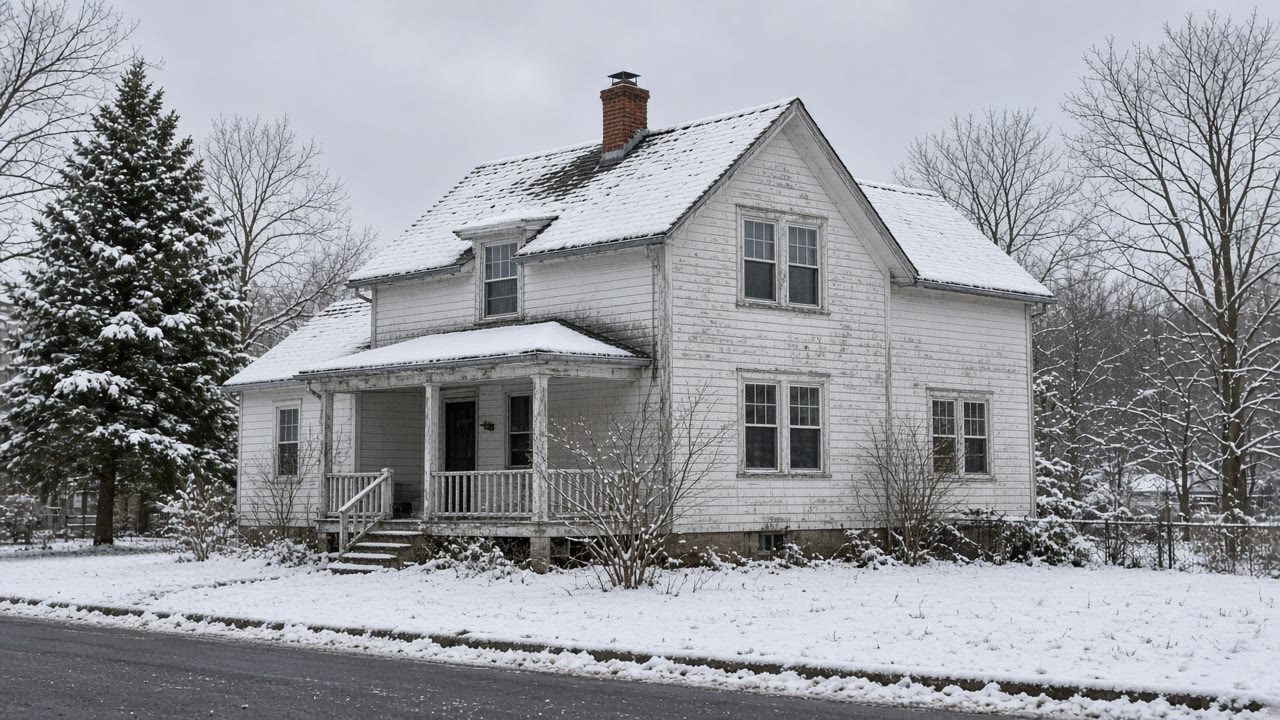
In Fayetteville village the median year of construction is 1961. Of 2,092 housing units, 20.7 percent were built in 1939 or earlier, 24.6 percent before 1950, 77.2 percent before 1980 and 22.8 percent in 1980 or later. 58.7 percent are single-family detached and 76.9 percent of occupied units are owner occupied.
Source: US Census Bureau, American Community Survey 2020-2024 5-year estimates, tables B25034 year structure built, B25035 median year structure built, B25024 units in structure and B25003 tenure, accessed 2026-09-14
The NOAA 1991 to 2020 hourly normals for Hancock International put the normal temperature at or below 32F for 2,220 hours a year, a quarter of the year, and at or below 40F for 3,263 hours, 37 percent of the year.
Source: NOAA National Centers for Environmental Information, accessed 2026-09-14
Fayetteville village has 2,092 housing units of which 13.0 percent are single-family attached, the highest attached share of any place on this site, and 11.7 percent sit in three and four unit buildings, leaving 58.7 percent single-family detached. Owner occupancy is 76.9 percent and the median build year is 1961, with 20.7 percent of units built in 1939 or earlier.
Source: US Census Bureau, American Community Survey 2020-2024 5-year estimates, tables B25034 year structure built, B25035 median year structure built, B25024 units in structure and B25003 tenure, accessed 2026-09-14
Why a Fayetteville stain in November is worth acting on
People put this off because they think of it as a cold snap problem. The NOAA normals for Hancock International record the temperature at or below 32F for 2,220 hours a year, a quarter of the year, and at or below 40F for 3,263 hours, which is 37 percent of it. So the conditions that make a roof deck a condensing surface are present for months at a stretch, not for the few days that produced the stain you happened to notice. Fayetteville village gives that a lot of building to work on: 77.2 percent of its 2,092 homes were built before 1980 and 20.7 percent were standing in 1939 or earlier, under a median build year of 1961.
What a Fayetteville homeowner gains by looking early
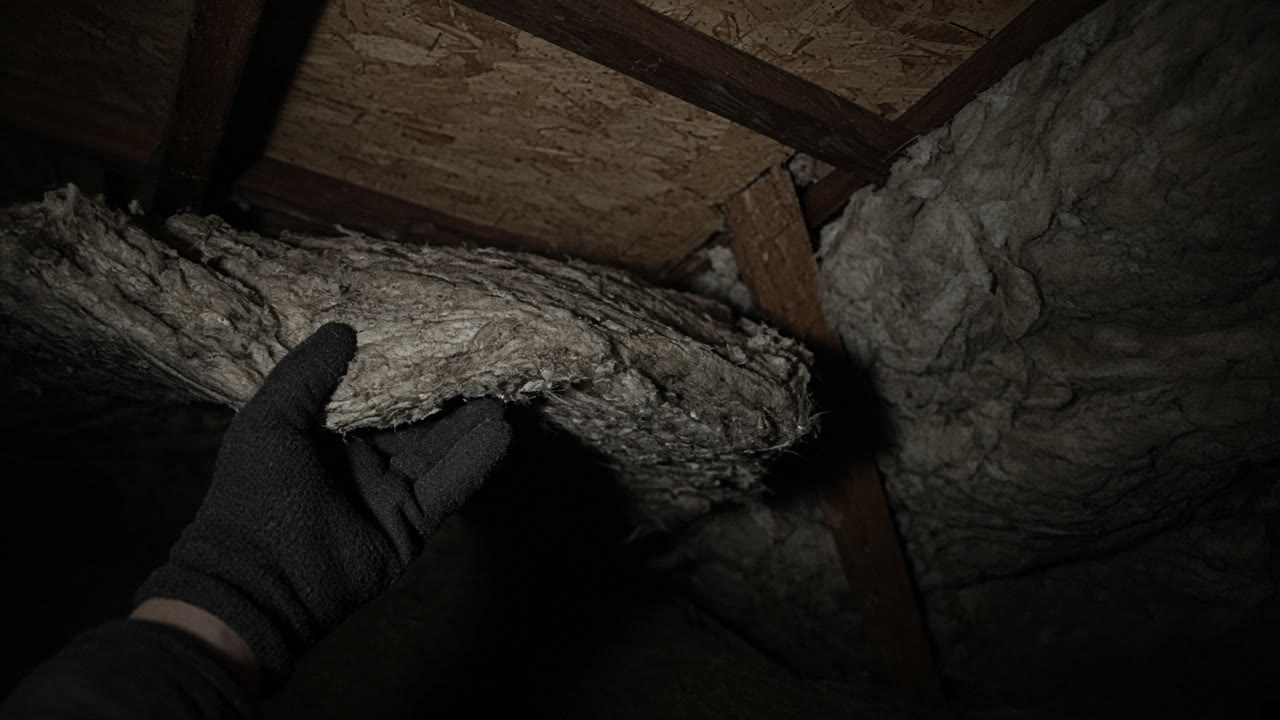
Looking in December rather than in March changes what is available to see and what it costs to act on. Through the cold months the evidence is live: frost or damp on the deck, wet insulation, rust forming at the nail points, and the pattern of where it is worst. By spring all of that has dried and the record is faint. Acting early also means the work happens before another few hundred hours of the same conditions, which on this stock matters, since 58.7 percent of the village is single-family detached and the rest sits in attached and multi-unit buildings where one neglected roof space affects more than one home.
Treat a single stain as a season, not an event
With 37 percent of the year at or below 40F, the conditions behind a winter stain recur for months. One sighting is the start of the record, not the whole of it.
Look while it is still cold
Frost, damp wood and wet insulation are visible in January and gone by April. A visit in the cold half of the year gets a better answer.
Say what kind of building it is
Detached, attached or one unit in a larger building changes who needs to be involved and what the roof space actually covers.
Tell us when you first saw the mark
And whether it has changed since. We arrange an insured contractor who looks while the evidence is still there.
Other roof system work in Fayetteville village
Leak questions from Fayetteville village homeowners
The stain has not grown since January. Can I leave it?
You can leave the decision and it is worth having the cause named now while the evidence is still visible. A stain that stopped growing usually means the supply of moisture stopped, which is information rather than a repair. If it was condensation, it will resume on the same schedule next winter, and you will be looking at a dry ceiling in July wondering what it looked like.
Is winter a bad time to have someone come out?
It is the right time for the diagnostic part. Cold weather makes the evidence obvious in a way a mild afternoon does not, and the attic work that usually follows is indoor work. Anything that has to happen on the roof itself gets scheduled for suitable conditions, and a contractor should tell you plainly which parts those are.
Get the cause named this winter
Send the Fayetteville address and a photo of the stain. No obligation, and the cold months are when this is easiest to prove.