
Onondaga County
Roof Leak Diagnosis Inside the Syracuse City Line
A stain on a city ceiling is worth naming before anyone quotes you a roof, because in this housing stock the likeliest cause sits above the plaster rather than above the shingles. Half the City of Syracuse was standing before 1950, 51.4 percent of it, and almost all of that got its insulation decades later, which is exactly the arrangement that wets a cold roof deck.
Request a quote in Syracuse
Share a few details so we can confirm coverage and arrange the right next step.
Would you rather talk it through? Call (315) 640-3590, answered 24/7.
$100 off your first job
Credited by us on your first booked job.
- One credit per customer per property, on your first booked job.
- Valid through December 31, 2026.
Mention this offer when you book. Full terms.
What a retrofitted city attic does in January
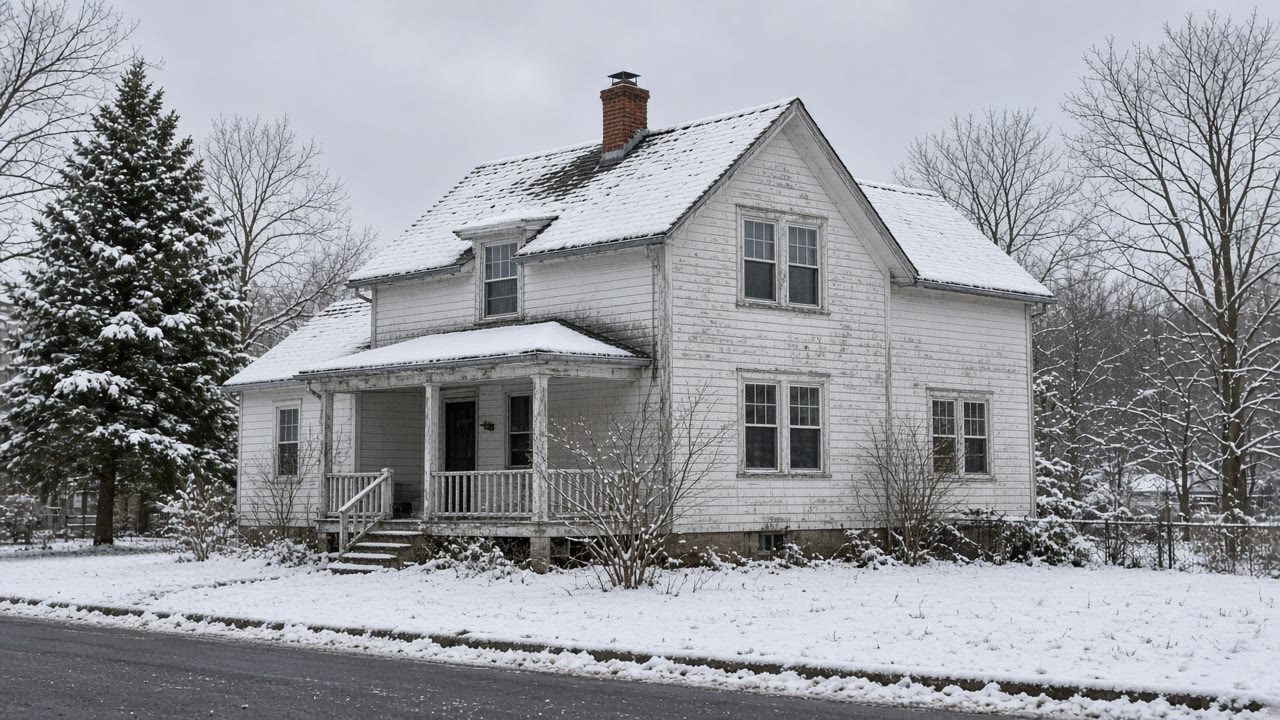
Start with the two things a city house of this age nearly always has: a ceiling full of holes, and a foot of insulation laid straight over them. New York's own energy code says air-permeable insulation shall not be used as a sealing material, which is the polite way of saying blown fiberglass filters air rather than stopping it, and the federal guidance is explicit that leaks are found and sealed before anything is insulated. Do it in the other order, which is how almost every city attic was done, and you have buried every hole that feeds the problem while making the deck colder at the same time. That is why a diagnostic visit here starts at the hatch and not on a ladder. Syracuse is also the one place on this site where the person who calls is often not the person who owns the roof: 41.6 percent of occupied units are owner occupied, the lowest figure anywhere in the county, and only 41.4 percent of the city's 67,601 units are single-family detached. On a double or a rental the first question is which part of the building the water is coming from and who can authorize work on it, and we settle that before anyone talks about a covering.
Not sure the stain is your roof at all?
Send the city address and what you are seeing. We match it to an insured contractor who finds the cause first and puts the repair in writing.
Roof system work we arrange inside the city line
Roof and Attic Leak Diagnosis
Find out where the water is actually getting in before anyone prices a covering, including whether it came through the roof at all.
Leak Diagnosis in Syracuse →Flat and Low-Slope Roofing
Find out whether a nearly flat porch, addition or garage roof leaks because it has the wrong covering on it, and what may lawfully go up there instead.
Low-Slope Roofing in Syracuse →Flashing, Chimney and Skylight Repair
Rebuild the joint the water is actually using, at a chimney, wall, valley, vent or skylight, without re-covering a roof that is still doing its job.
Flashing Repair in Syracuse →Gutters, Downspouts and Roof Drainage
Get the water that leaves the roof away from the house properly, instead of over the gutter, behind the fascia or straight down the foundation wall.
Gutters and Drainage in Syracuse →Attic Ventilation and Air Sealing
Stop indoor air reaching the cold roof deck, and get the vent area and the vent split right, so the attic stops making its own water.
Attic Ventilation in Syracuse →What the city's pre-1950 housing does on a cold night
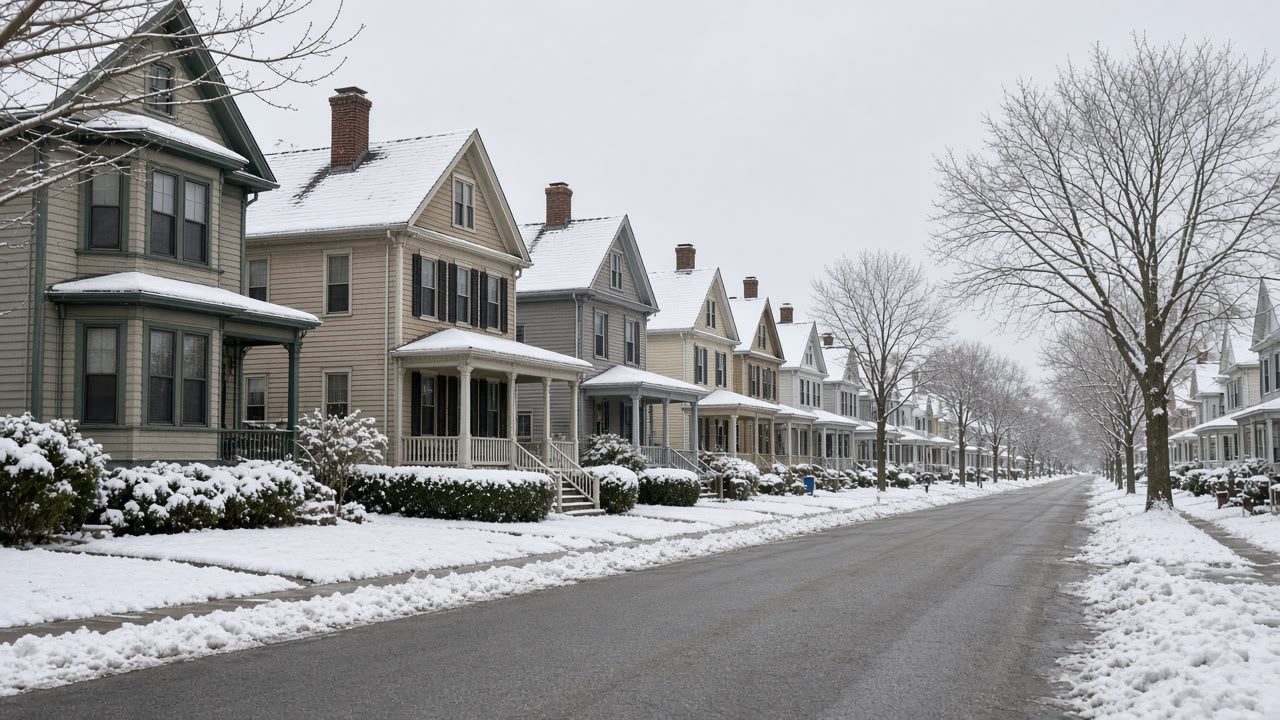
In the City of Syracuse the median year of construction is 1948. Of 67,601 housing units, 43.1 percent were built in 1939 or earlier, 51.4 percent before 1950, 85.5 percent before 1980 and 14.5 percent in 1980 or later. 41.4 percent are single-family detached and 41.6 percent of occupied units are owner occupied.
Source: US Census Bureau, American Community Survey 2020-2024 5-year estimates, tables B25034 year structure built, B25035 median year structure built, B25024 units in structure and B25003 tenure, accessed 2026-09-14
In the City of Syracuse only 41.4 percent of housing units are single-family detached houses. 17.5 percent sit in two-unit buildings, 9.2 percent in three and four unit buildings, 3.7 percent are single-family attached and owner occupancy is 41.6 percent, the lowest of any geography used on this site. The city's 67,601 units are 32 percent of all housing in Onondaga County.
Source: US Census Bureau, American Community Survey 2020-2024 5-year estimates, tables B25034 year structure built, B25035 median year structure built, B25024 units in structure and B25003 tenure, accessed 2026-09-14
Table R402.5.1.1 of the 2025 Energy Conservation Construction Code of New York State requires a continuous air barrier in the building thermal envelope with all breaks and joints sealed, and states in its general requirements that air-permeable insulation shall not be used as a sealing material.
Source: 2025 Energy Conservation Construction Code of New York State, via UpCodes, accessed 2026-09-14
The Department of Energy guide directs that air leakage be identified and sealed before insulating and installing finish materials, and names air sealing at the ceiling plane as the strongest opportunity to limit condensation in extreme conditions.
Source: US Department of Energy, Building America Solution Center, Pacific Northwest National Laboratory, accessed 2026-09-14
The Department of Energy's Building America Solution Center states that condensation occurs on building materials when their surface temperatures drop below the dew point of the air they are exposed to, and that in cold conditions that condensation often forms first as frost, which returns to liquid water when warmer weather arrives.
Source: US Department of Energy, Building America Solution Center, Pacific Northwest National Laboratory, accessed 2026-09-14
Put together, two sourced numbers define the gap this site works in. The Department of Energy recommends a heating-season indoor relative humidity of 30 to 50 percent, and the NOAA 1991 to 2020 hourly normals put the Syracuse mean air temperature at 24.2F through January. A house held in the recommended band at normal room temperature has an indoor dew point in the high 30s to around 50F, while the air on the other side of the ceiling averages the mid 20s.
Source: US Department of Energy, Building America Solution Center, Pacific Northwest National Laboratory, accessed 2026-09-14
Tell us what your city ceiling is doing
Where the mark is, when it shows up, and whether it rained. If the answer turns out to be your attic rather than your roof, we will say so, and there is no obligation either way.