
Onondaga County
Roof and Eave Leak Diagnosis in North Syracuse Village
A stain that runs as a band a foot or two in from an outside wall is not a roof leak, and in North Syracuse village that pattern is common enough to check before anything else. 86.6 percent of the village was built before 1980 while the two towns it straddles are close to half newer, so advice that fits Cicero or Clay does not necessarily fit the street you are standing on.
Request a quote in North Syracuse
Share a few details so we can confirm coverage and arrange the right next step.
Would you rather talk it through? Call (315) 640-3590, answered 24/7.
$100 off your first job
Credited by us on your first booked job.
- One credit per customer per property, on your first booked job.
- Valid through December 31, 2026.
Mention this offer when you book. Full terms.
Why North Syracuse ceilings mark in a line near the wall
The Department of Energy notes that insulation at attic eaves is often compressed or simply insufficient, because standard roof trusses are narrow where they meet the wall, and that in winter this produces cold spots along ceilings with condensation to follow. That is the band-shaped stain, it runs parallel to the outside wall rather than pooling, and the work is inside the attic rather than on the roof. North Syracuse makes it worth checking first because its stock is 1950s and 1960s and it is an old island in newer country: the village median build year is 1959, 86.6 percent of its 3,072 units predate 1980 and only 13.4 percent came after, while the Town of Cicero on one side is 50.4 percent post-1980 and the Town of Clay on the other is 45.0 percent. The village straddles the boundary between those two towns, so scope matters whenever you read anything general about roofs around here. 67.2 percent of the village is single-family detached and the same share is owner occupied, which in practice means the person who notices the stain is usually the person who can get into the attic and look at the band from above, and that is the cheapest step available to anybody.
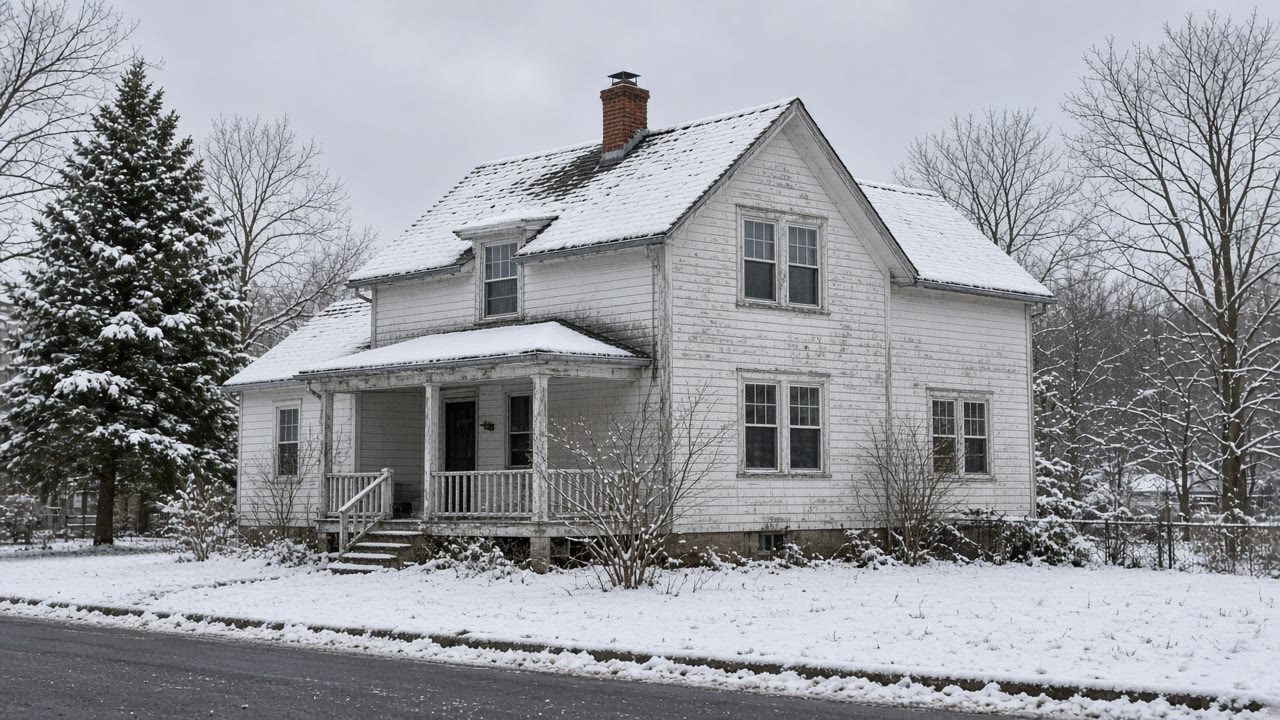
A stain in a stripe rather than a puddle?
Send the village address and a photo of the way it runs. We will arrange a visit that starts above the top plate.
Roof and eave work we arrange in the village
Roof and Attic Leak Diagnosis
Find out where the water is actually getting in before anyone prices a covering, including whether it came through the roof at all.
Leak Diagnosis in North Syracuse →Flat and Low-Slope Roofing
Find out whether a nearly flat porch, addition or garage roof leaks because it has the wrong covering on it, and what may lawfully go up there instead.
Low-Slope Roofing in North Syracuse →Flashing, Chimney and Skylight Repair
Rebuild the joint the water is actually using, at a chimney, wall, valley, vent or skylight, without re-covering a roof that is still doing its job.
Flashing Repair in North Syracuse →Gutters, Downspouts and Roof Drainage
Get the water that leaves the roof away from the house properly, instead of over the gutter, behind the fascia or straight down the foundation wall.
Gutters and Drainage in North Syracuse →Attic Ventilation and Air Sealing
Stop indoor air reaching the cold roof deck, and get the vent area and the vent split right, so the attic stops making its own water.
Attic Ventilation in North Syracuse →What an older village inside two newer towns changes
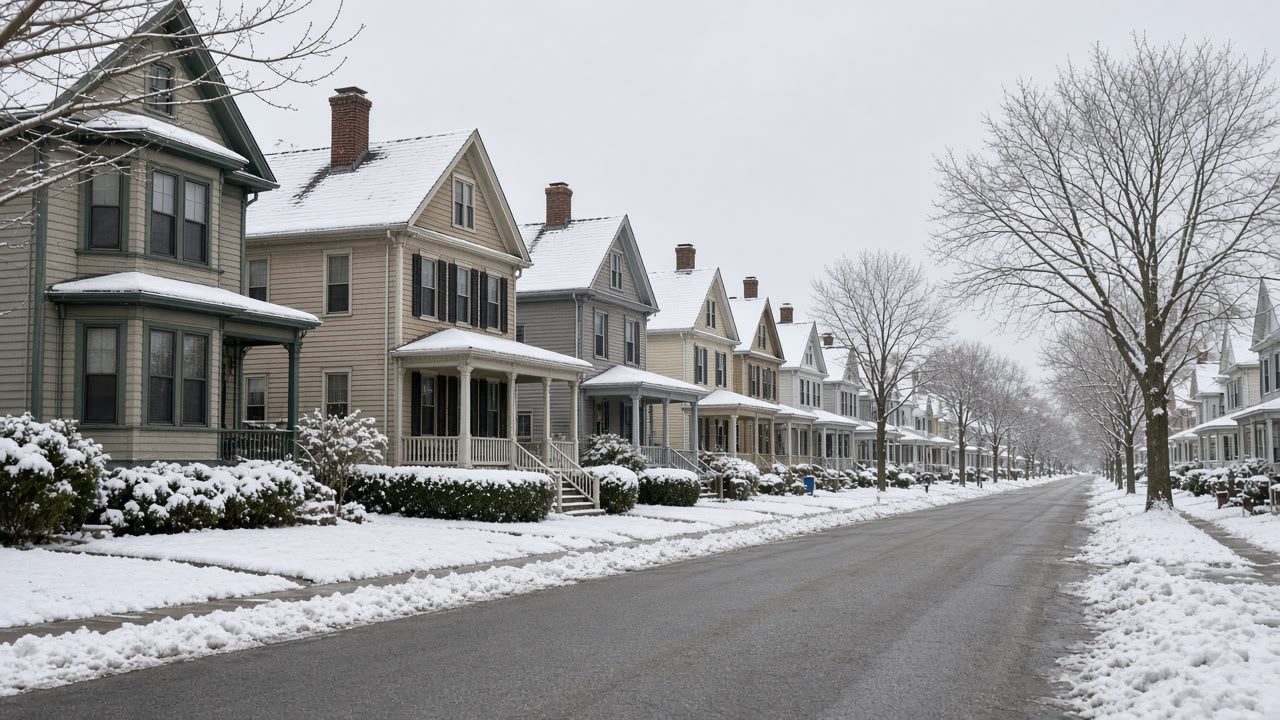
North Syracuse village has 3,072 housing units, 67.2 percent single-family detached and 6.3 percent single-family attached, with 67.2 percent owner occupancy and a median build year of 1959. 86.6 percent of the village was built before 1980 and only 13.4 percent since. The village straddles the boundary between the towns of Cicero and Clay.
Source: US Census Bureau, American Community Survey 2020-2024 5-year estimates, tables B25034 year structure built, B25035 median year structure built, B25024 units in structure and B25003 tenure, accessed 2026-09-14
In North Syracuse village the median year of construction is 1959. Of 3,072 housing units, 14.9 percent were built in 1939 or earlier, 22.0 percent before 1950, 86.6 percent before 1980 and 13.4 percent in 1980 or later. 67.2 percent are single-family detached and 67.2 percent of occupied units are owner occupied.
Source: US Census Bureau, American Community Survey 2020-2024 5-year estimates, tables B25034 year structure built, B25035 median year structure built, B25024 units in structure and B25003 tenure, accessed 2026-09-14
The Department of Energy guide notes that at attic eaves the insulation is often compressed or insufficient because standard roof trusses are narrow there, and that in winter this causes cold spots along ceilings with consequent condensation concerns.
Source: US Department of Energy, Building America Solution Center, Pacific Northwest National Laboratory, accessed 2026-09-14
In the Town of Cicero the median year of construction is 1980. Of 13,584 housing units, 6.9 percent were built in 1939 or earlier, 10.6 percent before 1950, 49.6 percent before 1980 and 50.4 percent in 1980 or later. 80.8 percent are single-family detached and 80.6 percent of occupied units are owner occupied.
Source: US Census Bureau, American Community Survey 2020-2024 5-year estimates, tables B25034 year structure built, B25035 median year structure built, B25024 units in structure and B25003 tenure, accessed 2026-09-14
In the Town of Clay the median year of construction is 1978. Of 26,282 housing units, 3.2 percent were built in 1939 or earlier, 5.6 percent before 1950, 55.0 percent before 1980 and 45.0 percent in 1980 or later. 68.0 percent are single-family detached and 71.2 percent of occupied units are owner occupied.
Source: US Census Bureau, American Community Survey 2020-2024 5-year estimates, tables B25034 year structure built, B25035 median year structure built, B25024 units in structure and B25003 tenure, accessed 2026-09-14
Several places on this site are villages inside towns of a different name, so their Census figures are not interchangeable. Liverpool village sits in the Town of Salina, Solvay village in the Town of Geddes, East Syracuse and DeWitt in the Town of DeWitt, Minoa and Fayetteville and Manlius village in the Town of Manlius, North Syracuse spans Cicero and Clay, Baldwinsville spans Lysander and Van Buren, Camillus village sits in the Town of Camillus, and Marcellus, Skaneateles, Elbridge, Jordan, Tully and Fabius each have a village inside a town of the same name.
Source: US Census Bureau, American Community Survey 2020-2024 5-year estimates, tables B25034 year structure built, B25035 median year structure built, B25024 units in structure and B25003 tenure, accessed 2026-09-14
Tell us where the mark sits on your North Syracuse ceiling
How far in from the wall, which way it runs, and whether it rained. A band parallel to an outside wall points somewhere very specific, and it is not the shingles.