
Dormer and Slope Change Flashing in North Syracuse
Wherever a roof changes direction or pitch, somebody had to make a decision, and that decision is usually where the water is getting in.
Flashing Repair quote in North Syracuse
Share a few details so we can confirm coverage and arrange the right next step.
Would you rather talk it through? Call (315) 640-3590, answered 24/7.
$100 off your first job
Credited by us on your first booked job.
- One credit per customer per property, on your first booked job.
- Valid through December 31, 2026.
Mention this offer when you book. Full terms.
Why added dormers put joints in a 1950s roof
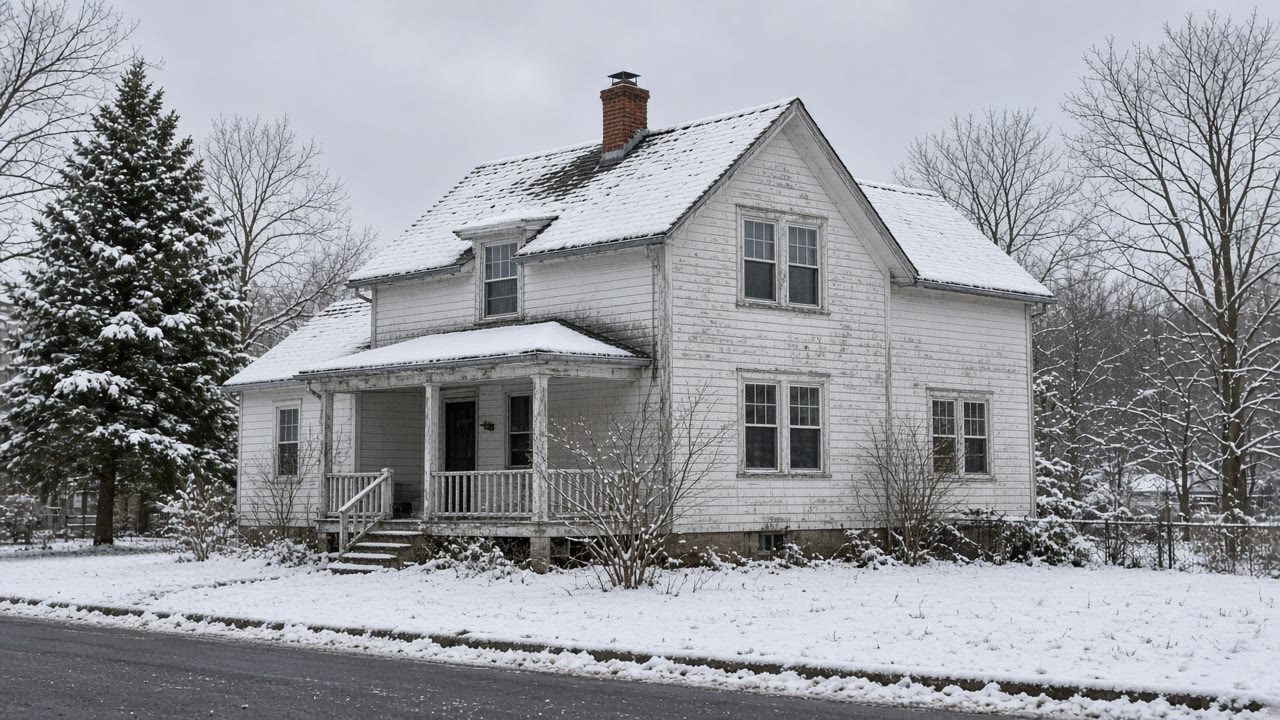
The code is specific about where flashing belongs, and the list reads like a tour of a postwar village house. Section R903.2.1 requires flashing at wall and roof intersections, wherever there is a change in roof slope or direction, and around roof openings. A cape or a ranch that gained a shed dormer, a rear extension or a converted upstairs has acquired every one of those conditions, and the junction between old roof and new is the place they meet. North Syracuse village is largely that stock, with a median build year of 1959, 6.3 percent of its units single-family attached and 86.6 percent of them standing before 1980, so the joints on these roofs have had decades to be disturbed and reworked.
What flashing repair involves
Finding the changed detail on a village roof
The useful question is when the shape of the roof last changed. A dormer added in the 1970s, a porch enclosed in the 1980s, a garage roof tied into the main slope at some point nobody remembers: each of those created a junction, and junctions made on site by whoever was there that week are the ones that fail. From inside, the stain will usually sit directly under the low corner of that junction rather than under the middle of a slope. From outside, look for a straight line where two roof surfaces of different age or color meet. That line is where somebody had to improvise, and improvisation is what a proper flashing repair replaces.
Ask when the roof shape last changed
A dormer, an extension or an enclosed porch created a junction. Junctions built on site are where water finds its way in.
Look for the line between two roof ages
Different color, different texture or a change in pitch marks the joint. That line is worth photographing before anybody quotes.
Match the stain to the low corner
Water arriving at a slope change runs to the bottom of it before it drops. The wet spot inside usually sits under that low point.
What altered village rooflines do at the junction
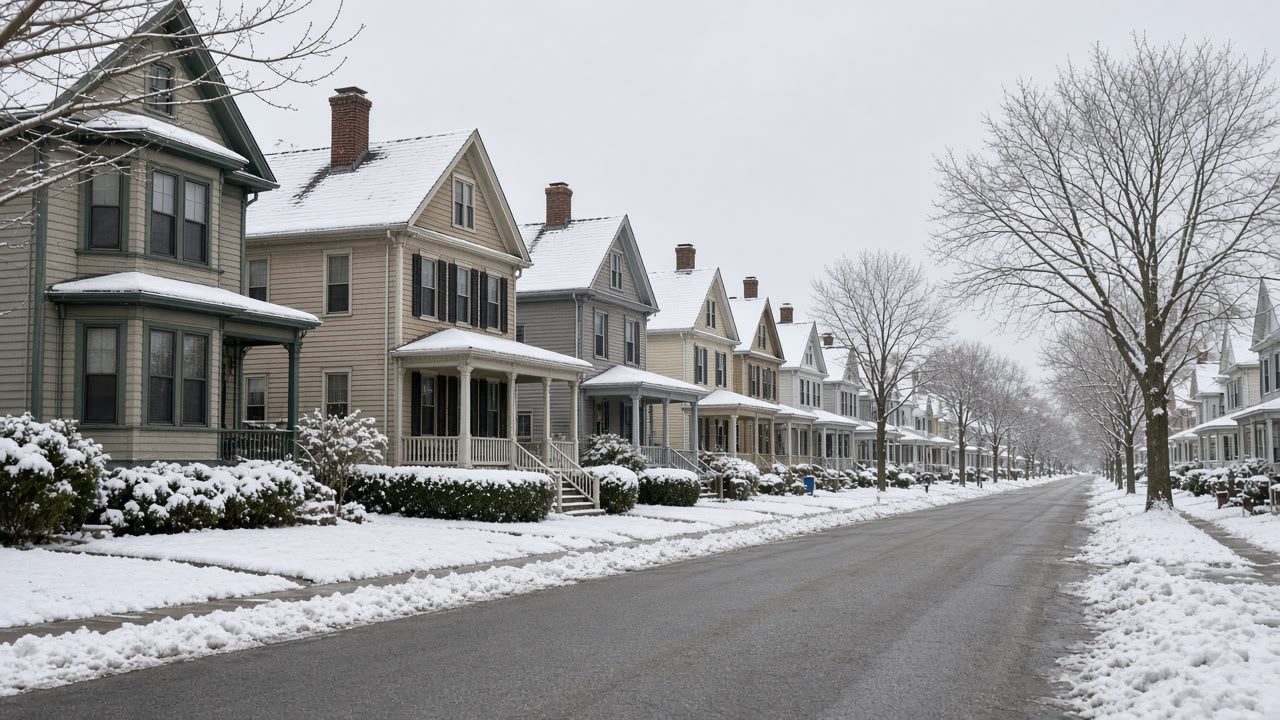
North Syracuse village has 3,072 housing units, 67.2 percent single-family detached and 6.3 percent single-family attached, with 67.2 percent owner occupancy and a median build year of 1959. 86.6 percent of the village was built before 1980 and only 13.4 percent since. The village straddles the boundary between the towns of Cicero and Clay.
Source: US Census Bureau, American Community Survey 2020-2024 5-year estimates, tables B25034 year structure built, B25035 median year structure built, B25024 units in structure and B25003 tenure, accessed 2026-09-14
Section R903.2.1 of the 2025 Residential Code of New York State requires flashings at wall and roof intersections, wherever there is a change in roof slope or direction, and around roof openings, and requires a flashing to divert water away from the point where the eave of a sloped roof meets a vertical sidewall. Where the flashing is metal it must be corrosion resistant and not less than 0.019 inch thick, which is No. 26 galvanized sheet.
Source: 2025 Residential Code of New York State, via UpCodes, accessed 2026-09-14
In North Syracuse village the median year of construction is 1959. Of 3,072 housing units, 14.9 percent were built in 1939 or earlier, 22.0 percent before 1950, 86.6 percent before 1980 and 13.4 percent in 1980 or later. 67.2 percent are single-family detached and 67.2 percent of occupied units are owner occupied.
Source: US Census Bureau, American Community Survey 2020-2024 5-year estimates, tables B25034 year structure built, B25035 median year structure built, B25024 units in structure and B25003 tenure, accessed 2026-09-14
Photograph where two roof shapes meet
The line between old roof and newer roof. We arrange an insured contractor who rebuilds the junction rather than sealing it.
Flashing questions from North Syracuse homeowners
The dormer has been sealed around twice and still leaks. What is different about a proper repair?
Sealant sits on top of a joint; flashing is built into it. A dormer cheek needs step pieces lapped up the wall and out onto the deck, woven in with the courses, with the covering released to get them in. That is why the repair that lasts always involves disturbing shingles and the one that does not never holds through a winter.
Does an old junction mean the whole roof is due?
Not on its own. A junction can leak on a covering with years left in it, because it fails as a detail rather than as a surface. If the field of the roof is sound, there is no reason for a joint repair to turn into a whole roof, and we will tell you plainly if it is otherwise.
Get the altered joint properly flashed
Send the village address and what changed on the roof. No obligation, and this is normally a detail repair.