
Chimney and Masonry Counterflashing in Liverpool
Where a roof meets brick, one piece of metal has to be let into the masonry itself, and surface-nailing it is why the leak came back.
Flashing Repair quote in Liverpool
Share a few details so we can confirm coverage and arrange the right next step.
Would you rather talk it through? Call (315) 640-3590, answered 24/7.
$100 off your first job
Credited by us on your first booked job.
- One credit per customer per property, on your first booked job.
- Valid through December 31, 2026.
Mention this offer when you book. Full terms.
What a village brick wall needs above the roof line
Masonry changes the detail, and it changes it in a way that is easy to skip. Section R905.2.8.3 of the 2025 Residential Code of New York State requires base flashing against a vertical sidewall to be continuous or step flashing at least 4 inches high and 4 inches wide, and where there is anchored masonry veneer it requires counterflashing as well. Counterflashing is the piece let into a joint in the brick and dressed down over the base flashing, so the top edge of the metal is protected by the masonry rather than by sealant. Liverpool village is where this comes up, with a median build year of 1938 and 88.8 percent of its 1,344 homes built before 1980, an era of substantial brick chimneys and masonry detail.
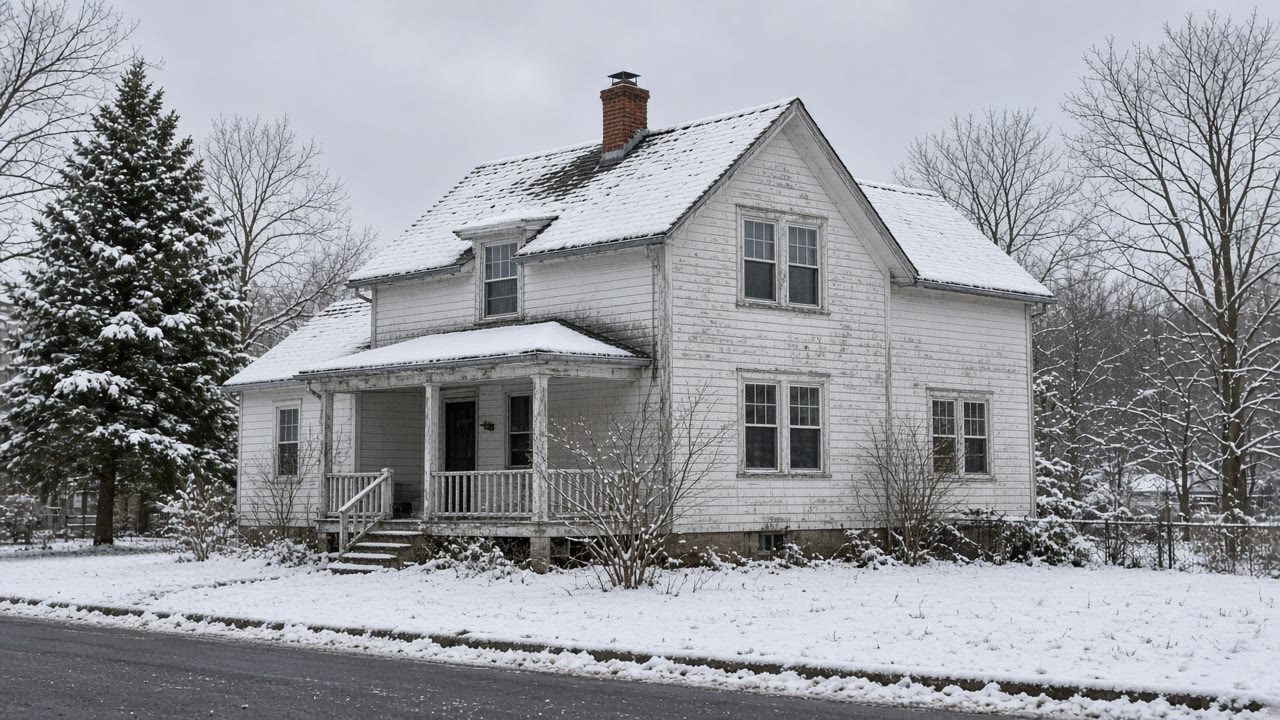
What flashing repair involves

Telling a real chimney repair from a cosmetic one
Look at where the metal ends. If the top edge of the flashing is fixed to the face of the brick and sealed with a bead, that is the version that fails: the sealant is doing the work, and sealant on a south-facing chimney has a short career. If the metal disappears into a cut line in the mortar joint, it was let in and it is protected by the masonry itself. On a village chimney the correct repair often means raking out a joint, setting the counterflashing in and repointing, which is masonry work alongside roofing, and a quote that involves neither trade touching the brick is unlikely to be the one that holds.
Find where the metal terminates
Into a mortar joint is right. Surface-fixed and sealed is the arrangement that comes back after a couple of winters.
Expect masonry work in a proper quote
Letting counterflashing in means cutting and repointing a joint. A roofing-only price for a brick chimney has probably left that out.
Keep the base and cover pieces separate
Base flashing works with the roof, counterflashing works with the wall. Both are needed and doing only one is the common shortfall.
What masonry adds to a Liverpool roof joint
Liverpool village has 1,344 housing units with a median build year of 1938, 50.2 percent built in 1939 or earlier and 88.8 percent before 1980. 62.9 percent are single-family detached, 9.7 percent sit in two-unit buildings and 6.3 percent are single-family attached, and owner occupancy is 62.9 percent.
Source: US Census Bureau, American Community Survey 2020-2024 5-year estimates, tables B25034 year structure built, B25035 median year structure built, B25024 units in structure and B25003 tenure, accessed 2026-09-14
Section R905.2.8.3 of the 2025 Residential Code of New York State requires base flashing against a vertical sidewall to be continuous or step flashing, not less than 4 inches in height and 4 inches in width, and to direct water away from the wall onto the roof or into the gutter. Where there is siding, the vertical leg of the flashing must run continuously under the siding; where there is anchored masonry veneer, counterflashing is required as well.
Source: 2025 Residential Code of New York State, via UpCodes, accessed 2026-09-14
In Liverpool village the median year of construction is 1938. Of 1,344 housing units, 50.2 percent were built in 1939 or earlier, 60.4 percent before 1950, 88.8 percent before 1980 and 11.2 percent in 1980 or later. 62.9 percent are single-family detached and 62.9 percent of occupied units are owner occupied.
Source: US Census Bureau, American Community Survey 2020-2024 5-year estimates, tables B25034 year structure built, B25035 median year structure built, B25024 units in structure and B25003 tenure, accessed 2026-09-14
Send a photo of the chimney at the roof line
Close enough to see where the metal ends. We arrange an insured contractor who deals with both halves of the joint.
Chimney questions from Liverpool homeowners
The roofer says the chimney is the mason's problem. Who is right?
Both trades own part of it and that is exactly why this leak survives. The base flashing belongs to the roof, the counterflashing belongs in the brick, and if nobody takes responsibility for the junction between them it stays open. The useful thing is to get one quote that describes both halves and names who is doing each.
We had the chimney repointed and it still leaks. Why?
Repointing renews the mortar between bricks, which is worth doing and does nothing about the metal at the roof line. If the counterflashing was never let in, or was covered over during the pointing, the water is still using the same route. Ask specifically whether a counterflashing was cut in as part of the work.
Get the counterflashing put in properly
Tell us the Liverpool address and what has already been tried. No obligation, and this is a detail repair rather than a roof.