
Gutters and Roof Drainage on City of Syracuse Lots
If one length of gutter spills in the same place every storm, the run has lost its fall, and re-hanging it costs a fraction of replacing it.
Gutters and Drainage quote in Syracuse
Share a few details so we can confirm coverage and arrange the right next step.
Would you rather talk it through? Call (315) 640-3590, answered 24/7.
$100 off your first job
Credited by us on your first booked job.
- One credit per customer per property, on your first booked job.
- Valid through December 31, 2026.
Mention this offer when you book. Full terms.
Deciding what a city drainage job actually needs
Start by separating the three faults, because they carry very different prices. A run that overflows in one spot has lost its pitch and usually needs re-hanging rather than replacing. A run that overflows everywhere in a heavy storm is short of outlet capacity, which is a downspout question and sometimes a channel size question, since the guidance treats 4, 5 and 6 inch channels as a real choice while K and half round are only a look. A run that behaves but leaves a wet patch at the wall is not a gutter fault at all, and an extension solves it for the cost of an afternoon. Knowing which of the three you have stops you buying the most expensive one by default.
Watch it rain once before you buy anything
Where the water goes over the edge, and whether it goes over everywhere or in one place, tells a contractor more than any measurement taken on a dry day.
Check the discharge distance first
Five feet from the wall, or ten to a buried catchment that is not connected to the foundation drain. It is the cheapest correction available and it is the one most city houses need.
Look behind the gutter, not just in it
On prewar city eaves the fascia board behind a long-overflowing run is often the real cost. Finding that at the quote stage is better than finding it on the day.
What a city lot and a Syracuse rainfall year do to a gutter run
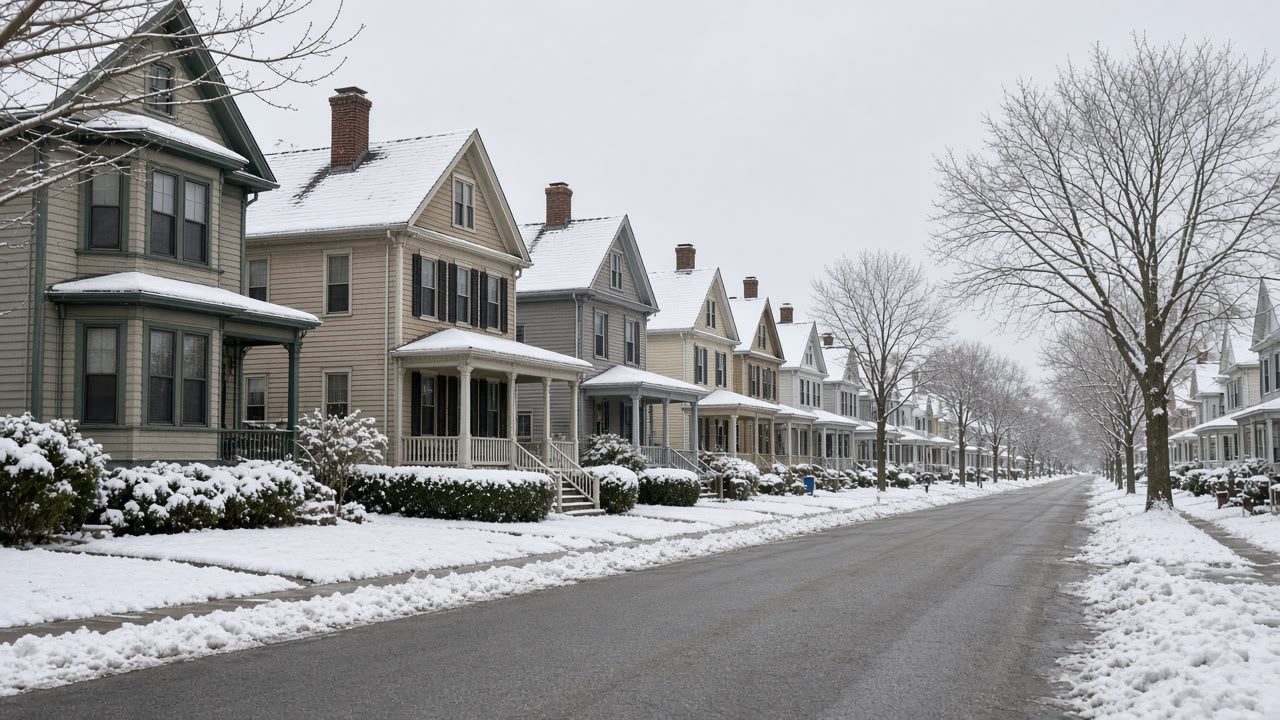
In the City of Syracuse the median year of construction is 1948. Of 67,601 housing units, 43.1 percent were built in 1939 or earlier, 51.4 percent before 1950, 85.5 percent before 1980 and 14.5 percent in 1980 or later. 41.4 percent are single-family detached and 41.6 percent of occupied units are owner occupied.
Source: US Census Bureau, American Community Survey 2020-2024 5-year estimates, tables B25034 year structure built, B25035 median year structure built, B25024 units in structure and B25003 tenure, accessed 2026-09-14
The Department of Energy guide directs that gutters be installed along the roof eaves sloping at least 1/16 inch per foot of run to give positive drainage toward the downspouts, and that downspouts terminate at least 5 feet from the foundation, or discharge to an underground catchment at least 10 feet from the foundation that is not connected to the foundation drain system. Gutter channels come in 4, 5 and 6 inch sizes and the style, K or half round, is aesthetic rather than a performance difference.
Source: US Department of Energy, Building America Solution Center, Pacific Northwest National Laboratory, accessed 2026-09-14
The NOAA 1991 to 2020 normals for Hancock International put annual precipitation at 38.47 inches, with 173.6 days a year recording at least a hundredth of an inch, 89.7 days at least a tenth, 22.7 days at least half an inch and 5.3 days an inch or more, plus an annual snowfall normal of 123.8 inches.
Source: NOAA National Centers for Environmental Information, accessed 2026-09-14
What gutters and drainage involves
Where a city downspout actually puts the water
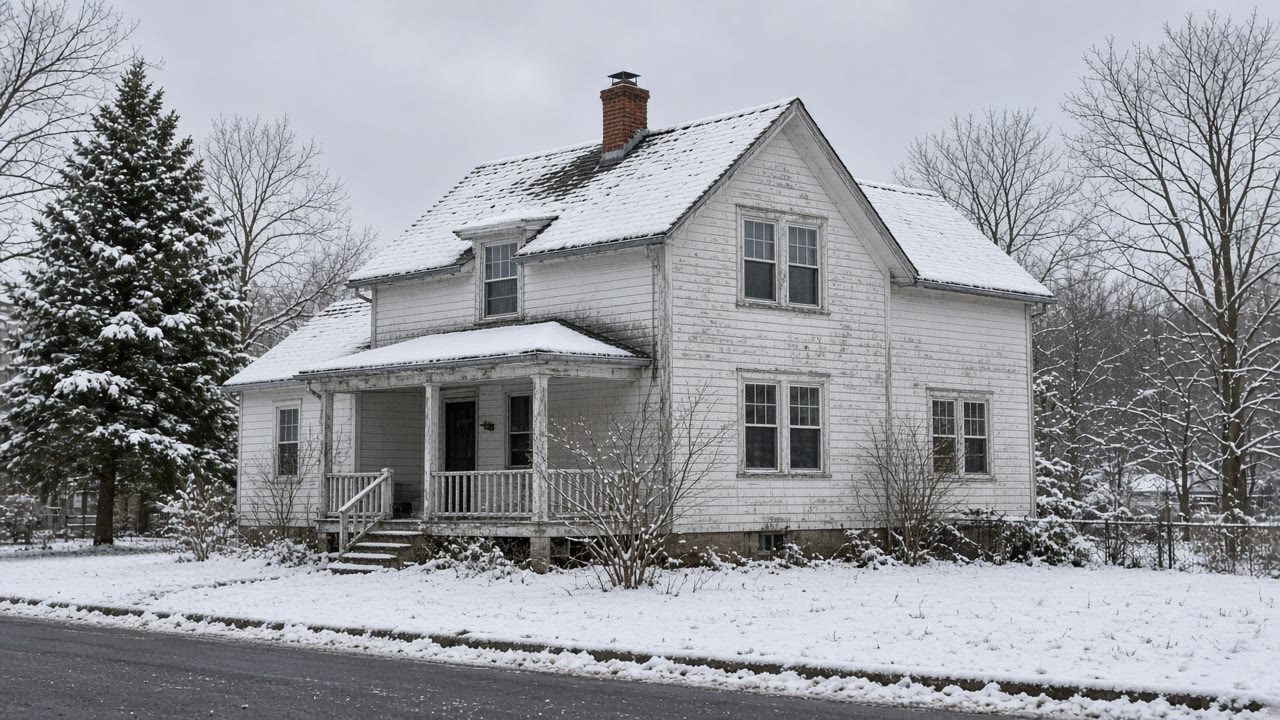
Two numbers settle most drainage complaints and a homeowner can check both from the yard. Federal guidance asks for gutters to fall at least 1/16 inch per foot toward the outlet, about an inch over sixteen feet, and for a downspout to finish at least 5 feet from the foundation, or 10 feet if it runs to an underground catchment, which must never be tied into the foundation drain. On a city lot those five feet are the hard part, because 43.1 percent of the city's housing went up in 1939 or earlier on plots laid out long before anybody thought about where the roof water landed. And there is plenty of it to place: the Syracuse normal is 38.47 inches of precipitation a year across 173.6 days, with 22.7 days delivering half an inch or more.
Show us where the water is going over
One spot or all along the run, and where the ground is wet afterwards. We arrange an insured contractor who checks the fall before quoting.
Gutter questions from city of Syracuse homeowners
My neighbor's wall is four feet away. Where can the water go?
Usually forward or back rather than sideways. On a narrow city plot the answer is often a longer buried leader taken to the front or rear of the lot, or a re-routed downspout emptying where the ground already falls away. What it cannot do is finish at the foundation, and that is the part worth insisting on.
Are leaf guards worth it here?
They reduce clearing on a run under trees and they do not change the fall, the outlet capacity or where the water lands. If the complaint is overflow in one spot, a guard will not touch it. Get the pitch and the discharge right first, then decide whether guards save you a ladder trip twice a year.
Get the water landing five feet out
Send the city address and what happens in a heavy storm. No obligation, and the fix is often an extension rather than a new gutter.