Drainage in Clay
Gutter drainage in Clay, NY: where does your roof water end up?
Water spilling over a Clay gutter, or pooling where the downspout ends, can look like a roof leak from inside. Gutter drainage in Clay, NY starts when you follow the water from the roof edge to the ground and tell us where it stops.
Asking where the water gets in commits you to nothing.
What we do
We help you find where the water really gets in and book a diagnostic visit with an independent roofer, who puts the fix in a written proposal.
Our word before the ladder goes up
- You owe nothing for asking, and you can walk away.
- The visit looks for the way in before any roof talk.
- You see the repair proposal in writing before work starts.
- The $100 credit follows the rules on our Terms page.
The roofer you hire answers for their own work and contract.
Signed Roofing Pros Syracuse, (315) 640-3590
What this word covers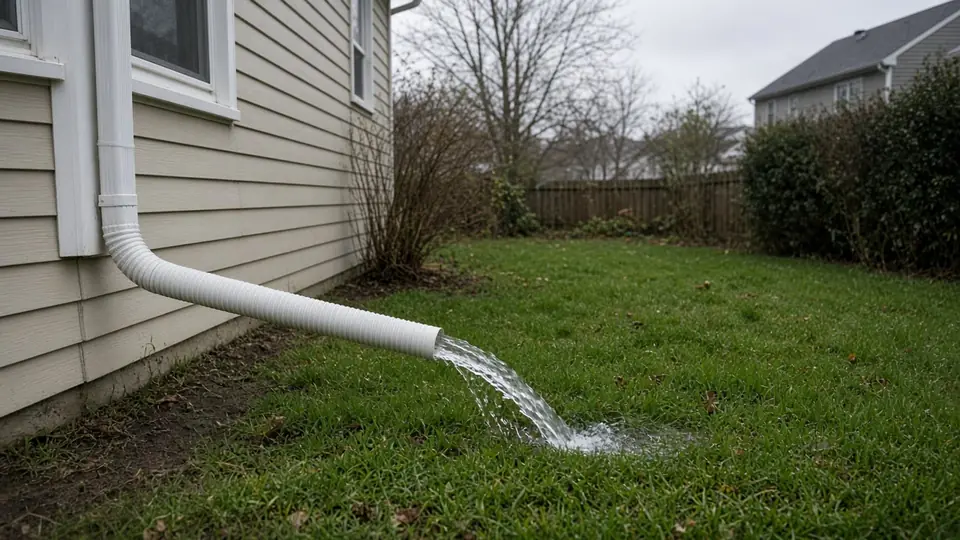
Questions
Gutters and drainage in Clay: short answers
Can a gutter fault cause a stain inside my Clay house?
Yes. Water that spills behind a gutter or runs down a wall can show up as a stain on an interior wall. The visit should follow the water, not assume the roof.
Do I have to keep gutters if they freeze?
It is a per-house choice. Ask the contractor about grade-level drainage for your roof edge and what it would do near your foundation.
Who fixes a downspout that drains onto my neighbor?
Start with a written note to them, with a photo. The contractor can tell you what to change on your side.
Is a wet Clay basement wall a roof problem?
Often it is a drainage problem. Check where the nearest downspout ends. If it lands short of 5 feet from the wall, the water can soak back toward the foundation.
Gutter drainage in Clay: following roof water from the edge to the ground
Roof water makes a trip with four stops: the roof edge, the gutter, the downspout and the ground. A fault at any stop can send water to the wrong place. A stain on an interior wall can come from the third or fourth stop, not the roof.
The federal guidance sets two numbers worth knowing. Every foot of gutter needs a drop of at least 1/16 inch toward the outlet. A downspout should end 5 feet or more out from the foundation. A gutter that holds a puddle after rain fails the first. A downspout that ends at the wall fails the second.
Take two photos in a rain: the gutter at its worst and the ground under the downspout. They tell the contractor more than a description. The article on where roof water ends up shows the whole path.
Signs
Signs a Clay roof needs gutters and drainage
Water sheets over the gutter in rain
Watch during a downpour. Note which stretch of gutter overflows.
Soil or mulch washed out under a downspout
The water lands too close to the house. Measure the distance to the foundation.
A damp basement wall below one roof edge
Mark which wall, and what roof edge sits above it.
Stained fascia or sagging gutter ends
Look from the ground with binoculars. Do not lean a ladder on a loaded gutter.
Single-story Clay houses and the long drop to the ground
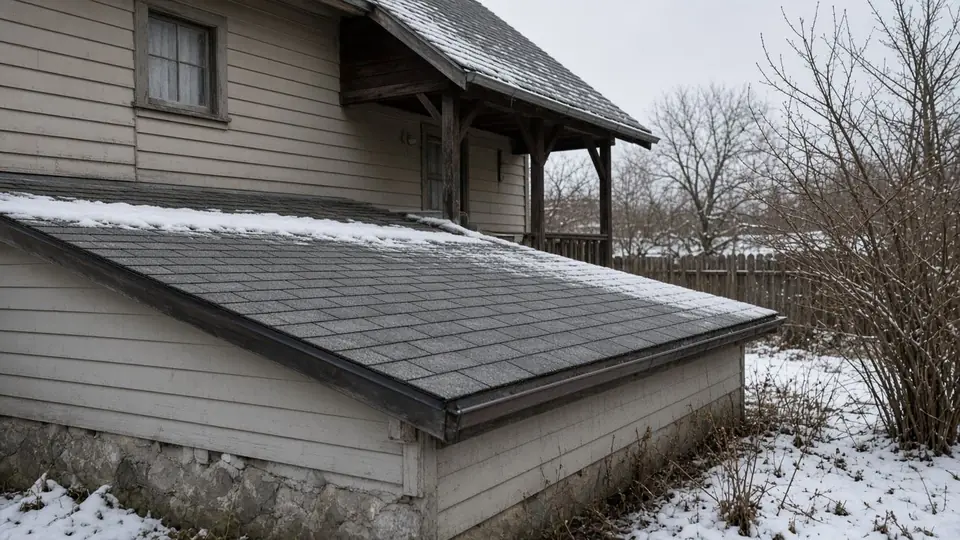
If your Clay house has a low eave, it puts the downspout close to the ground, so the run is short and easy to check. It also puts the water near the foundation unless someone extends it.
Ask the contractor for the extension length, where it ends and what the water does when the ground is frozen.
When a Clay gutter freezes: the per-house question
Gutters can freeze in cold winters. Federal guidance offers one alternative: drainage at grade level that carries runoff away from the foundation. It is a choice for each house, not a rule, and it does not mean every gutter should come down.
Ask the contractor which option suits your roof edge, and why. If a neighbor shares your wall, as with 7.4 percent of Clay homes, ask where the water from the shared edge goes. Their downspout may be the one that matters. If a stain inside is the reason you are here, see the Clay stain page first.
Before you book, walk the outside of the house in a steady rain, if you can do it from the ground. Note every spot where water falls off the roof edge and where it ends up. Notice any place it runs down a wall. Share that list with us. It points to the faulty stop faster than any description, and it keeps the Clay visit focused on what you saw.
Other ways in
Other ways water gets into a Clay house
Roof Leak Diagnosis
Trace the stain to its source first.
Low-Slope Roofing
Ask for the pitch before anyone patches again.
Roof Flashing Repair
Name the joint nearest the drip.
Attic Ventilation
Seal the ceiling before adding any vents.
Nearby
Neighbors of Clay with this page
Tell us where the water lands in Clay.