Low-slope in Clay
Low slope roofing in Clay, NY: the breezeway or addition roof that keeps leaking
If a Clay breezeway, back addition or porch roof leaks again after every patch, it may be too flat for the shingles on it. Low slope roofing in Clay, NY begins with a close look at the pitch, then a visit to ask whether the roof needs a membrane.
Asking where the water gets in commits you to nothing.
What we do
We help you find where the water really gets in and book a diagnostic visit with an independent roofer, who puts the fix in a written proposal.
Our word before the ladder goes up
- You owe nothing for asking, and you can walk away.
- The visit looks for the way in before any roof talk.
- You see the repair proposal in writing before work starts.
- The $100 credit follows the rules on our Terms page.
The roofer you hire answers for their own work and contract.
Signed Roofing Pros Syracuse, (315) 640-3590
What this word covers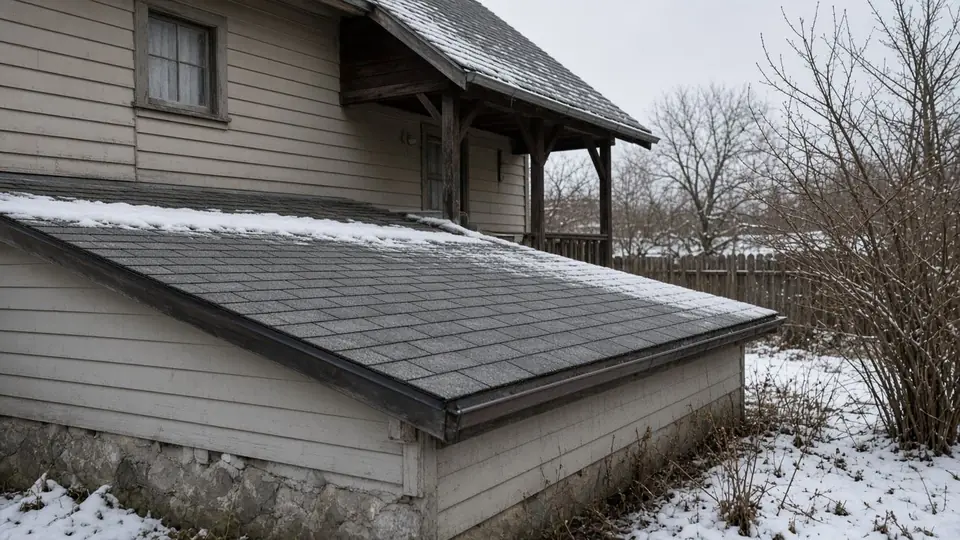
Questions
Before you commit to low-slope roofing in Clay
My Clay garage roof is shingled and leaks. Does that mean it is too flat?
It may. Have the pitch measured first. Below 2:12 the shingles themselves are the wrong choice. Above it, look next at the joint where the roof meets the house wall.
Which Clay addition roofs deserve a second look?
Any add-on that has leaked more than once. A sunroom, a mudroom or a garage link can sit flatter than the main roof. Photograph each one from the yard and tell us which one drips.
I rent in a Clay building with a flat roof. What do I do?
Tell the landlord or manager in writing, with photos and dates. The roof is theirs to deal with. We can give you the questions to ask.
Can I walk on the Clay addition roof to measure it?
Skip that. Look from a window or the yard, or take a photo level with the roof edge and send it. Never climb a wet or frosty roof.
Low slope roofing in Clay, NY: how to get your pitch
You do not need to go up to get a roof's pitch. A roof that falls 2 inches over 12 inches of run has a pitch of 2:12. From a window or the yard, photograph the roof edge-on and send it with the form. The contractor measures it for real.
The number decides what belongs on the roof. Shingles are allowed at 2:12 or steeper. Anywhere from 2:12 to 4:12 the code also wants two layers of underlayment beneath them. Under 2:12 the roof needs a different product, such as a membrane.
If your add-on measures under 2:12 and carries shingles, repeat patching will not hold. Ask the contractor for the measured number and what product they would put there. The article on porch roofs that keep leaking walks through the same question.
Signs
When a Clay stain calls for low-slope roofing
A patch that fails by the next season
Note each repair date. Three fixes at one spot is a slope question, not bad luck.
Water ponds on the roof after rain
Look from an upstairs window. A puddle that stays a day means the surface does not drain.
Shingles curl or lift on the addition only
If the main roof looks fine and the add-on does not, compare the two pitches.
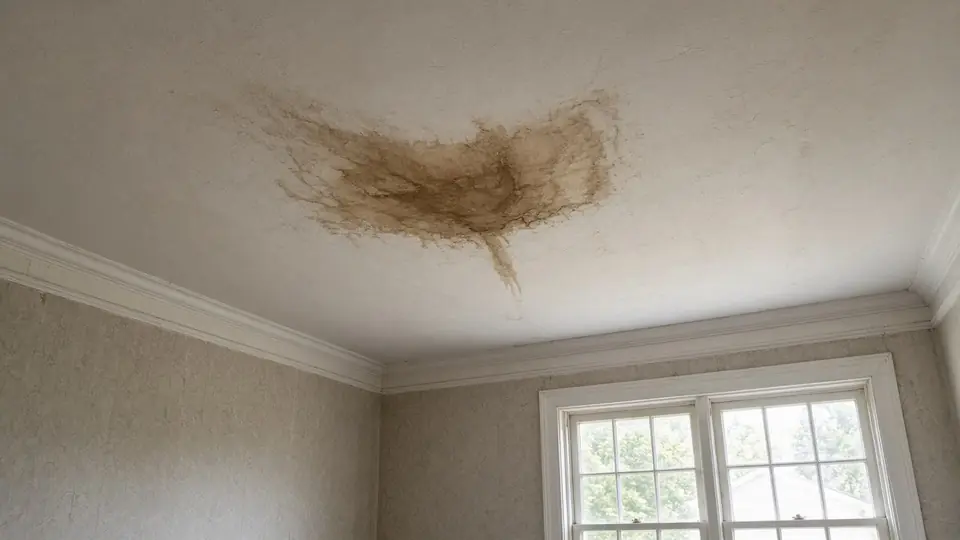
The stain is under the addition, not the house
Name the room and the roof above it. Say whether it is a garage, breezeway or family room.
Where Clay's postwar houses pick up a flat spot, and who owns a shared one
Nearly half of Clay's homes date from the 1950s through the 1970s. Housing of those decades may have had rooms added over the years, so ask what has been added and when. Each one gets its own small roof, and each small roof raises its own question about pitch.
That is a proxy, not a count. It does not say your roof is too flat. It says the roof over your addition is the first one to measure.
Ask which add-ons were built last, and have those measured first.
Shared roofs are a different call. About one in five Clay homes is in a building of five or more units, and 7.4 percent are attached. A flat roof over a shared building belongs to the owner or association.
Send them photos, the dates and the room, and ask who the contractor is. If your add-on sits on a detached house, the decision is yours. Start at the Clay roof leak hub if you are unsure which case you are in.
What a membrane roof asks of the Clay house under it
If your add-on needs a new product, the 2025 code names several low-slope systems, from built-up to single-ply. Each calls for a design slope of at least a quarter unit in 12 so the water can leave. A roof that cannot shed water over its edge needs a drain at each low point.
So ask three things. What product is proposed? Where does the water go? And what changes at the wall where the add-on meets the house? The last question matters in Clay, where an addition can be tied into a wall of the original house, so the wall-joint questions for Clay apply too. Send a photo of the add-on with the form, and we book the visit.
Other ways in
More places to look in Clay
Roof Leak Diagnosis
Trace the stain to its source first.
Roof Flashing Repair
Name the joint nearest the drip.
Gutters and Drainage
Follow the water from edge to ground.
Attic Ventilation
Seal the ceiling before adding any vents.
Nearby
Nearby pages on low-slope roofing
Ask for the pitch, then tell us what you see.