
Tracing a Ceiling Leak in an East Syracuse Village House
There are four separate ways a house ends up with water on a ceiling, and only one of them is a hole in the covering.
Leak Diagnosis quote in East Syracuse
Share a few details so we can confirm coverage and arrange the right next step.
Would you rather talk it through? Call (315) 640-3590, answered 24/7.
$100 off your first job
Credited by us on your first booked job.
- One credit per customer per property, on your first booked job.
- Valid through December 31, 2026.
Mention this offer when you book. Full terms.
What a 1938 village attic lets an assessor see
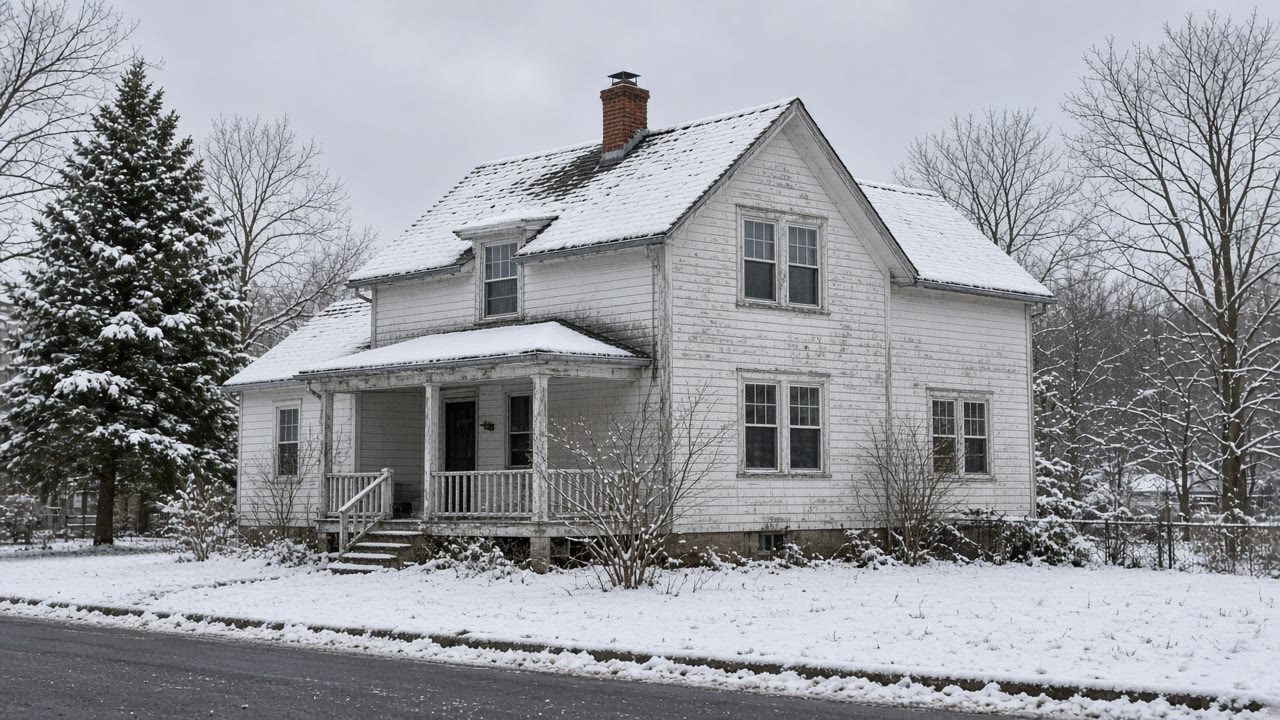
In East Syracuse village the median year of construction is 1938. Of 1,464 housing units, 54.0 percent were built in 1939 or earlier, 62.1 percent before 1950, 89.8 percent before 1980 and 10.2 percent in 1980 or later. 41.5 percent are single-family detached and 52.7 percent of occupied units are owner occupied.
Source: US Census Bureau, American Community Survey 2020-2024 5-year estimates, tables B25034 year structure built, B25035 median year structure built, B25024 units in structure and B25003 tenure, accessed 2026-09-14
The same Department of Energy guide sets out four conditions that together cause attic condensation: a surface colder than the dew point, a pressure difference plus a hole in the air barrier that lets air through it, high humidity in warm indoor air, and a lack of ventilation or drying potential.
Source: US Department of Energy, Building America Solution Center, Pacific Northwest National Laboratory, accessed 2026-09-14
The NOAA 1991 to 2020 monthly normals for Hancock International give January 19.1 days with at least a hundredth of an inch of precipitation and only 7.2 days with a tenth of an inch or more. February runs 16.0 days and 6.3 days. So in a normal January about twelve days record no measurable precipitation at all and about twenty-four record less than a tenth of an inch.
Source: NOAA National Centers for Environmental Information, accessed 2026-09-14
The four conditions a village visit checks in order
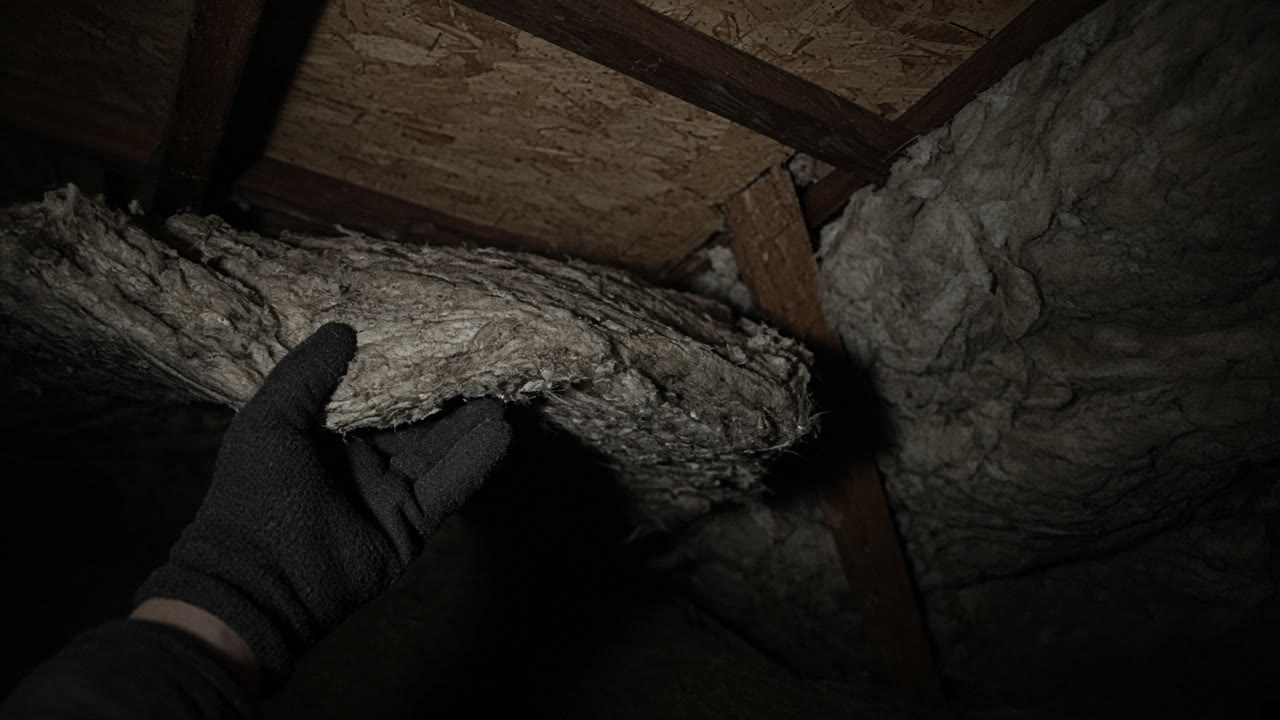
Rule things in and out before buying anything. Federal guidance sets out four conditions that together produce attic condensation: a surface colder than the dew point of the air touching it, a pressure difference with a hole in the air barrier for air to move through, humid warm air indoors, and too little ventilation or drying potential. A visit here can check all four, because this village stock cooperates. The median build year is 1938, 54.0 percent of the 1,464 units were standing in 1939 or earlier, and houses of that age usually give you an open framed attic you can look along with a flashlight. The date matters as much as the attic does. In a normal January about twelve days in the month record no measurable precipitation at all, so when a mark appeared is evidence in its own right.
What to have ready before a village visit
Bring the calendar and the layout, in that order. The calendar tells us whether water fell on the house at all in the days before the mark showed, and in a Syracuse January that is genuinely useful information rather than small talk, because dry days outnumber wet ones. The layout tells us what sits above the stain, which in a 1938 village house is rarely obvious from below: rooms were added, ceilings were lowered, and a stain in a back bedroom can be fed from a plane two rooms away. Between the two, a visit usually reaches a named cause in one trip rather than three, and you get a written proposal for closing whatever it turns out to be.
Write down the date and the weather
A stain that grew on a dry, cold night is condensation. In a normal January about twelve days record no measurable precipitation at all, so this is a question with a real answer.
Check whether the attic is walkable
Most village houses of this age have open framing that can be looked along. Where the space has been floored or converted, the visit takes longer and the quote should say so.
Say what has already been tried
A repair that was done and did not hold is the single most useful thing you can tell us. It usually means the first diagnosis was wrong rather than the workmanship.
Tell us when the mark first appeared
The date and the weather that week. We match it to an insured contractor who checks the attic before the covering.
Other roof system work in East Syracuse village
Diagnostic questions from East Syracuse callers
It only marks up when the weather turns. Is that still a leak?
It is water, and it may well not be coming through the covering. Condensation is driven by temperature rather than by rainfall, so a stain that tracks the cold snaps and ignores the rain is pointing at the attic. That is a different job from a roof repair and usually a cheaper one, which is why it is worth establishing first.
How long does a diagnostic visit take here?
Usually one visit on a house of this age, because the framing is open and the evidence is visible from the hatch. Where a suspected joint needs water testing from above with somebody watching from inside, that adds time, and the contractor should tell you before starting rather than after.
Get a village ceiling stain explained
Send the address and a photo of the mark. No obligation, and the cause is often above the plaster rather than above the shingles.