
Where Geddes Downspouts Put the Water
The cheapest thing on any drainage quote is usually the piece that solves the problem: a length of pipe that takes the water away from the wall.
Gutters and Drainage quote in Geddes
Share a few details so we can confirm coverage and arrange the right next step.
Would you rather talk it through? Call (315) 640-3590, answered 24/7.
$100 off your first job
Credited by us on your first booked job.
- One credit per customer per property, on your first booked job.
- Valid through December 31, 2026.
Mention this offer when you book. Full terms.
Deciding where each Geddes downspout should end
Walk the house after a heavy rain and look at the ground rather than at the roof. Syracuse normally records 38.47 inches of precipitation a year with 89.7 days delivering at least a tenth of an inch, so any place where the water is landing badly has plenty of opportunities to show you. What you are looking for is soft ground at the wall, a splash line up the siding or a channel cut into a flowerbed. Each of those is one extension away from being solved, and none of them needs the gutter above to be touched. Fix that first, then decide whether the run itself needs anything.
Look at the ground, not the gutter
Soft soil, a splash line on the siding or a cut channel in a bed tells you where the discharge is failing. That is the cheap end of the job.
Get every outlet at least five feet out
It is the published target and it is achievable on almost every lot in this town with an extension or a short buried run.
Never tie a leader into the foundation drain
An underground line has to be independent and finish ten feet out. Connecting it to the foundation system sends roof water exactly where you do not want it.
What one repeated house design does with its roof water
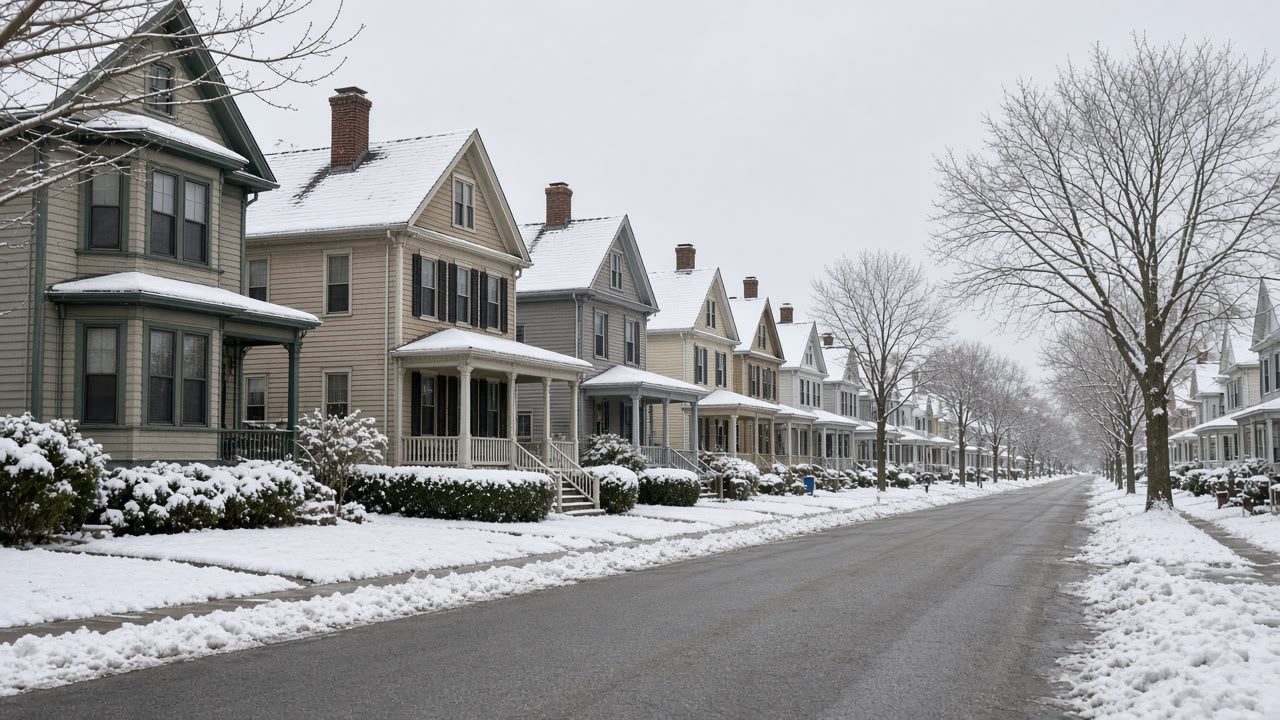
The Town of Geddes has 7,615 housing units of which 72.0 percent are single-family detached and 8.7 percent sit in two-unit buildings, with 73.3 percent owner occupancy. 85.1 percent of the town was built before 1980 and 37.5 percent before 1950. Westvale, inside the town, is 98.6 percent single-family detached, the highest share of any Census place in the metro, with a median build year of 1956.
Source: US Census Bureau, American Community Survey 2020-2024 5-year estimates, tables B25034 year structure built, B25035 median year structure built, B25024 units in structure and B25003 tenure, accessed 2026-09-14
The Department of Energy guide directs that gutters be installed along the roof eaves sloping at least 1/16 inch per foot of run to give positive drainage toward the downspouts, and that downspouts terminate at least 5 feet from the foundation, or discharge to an underground catchment at least 10 feet from the foundation that is not connected to the foundation drain system. Gutter channels come in 4, 5 and 6 inch sizes and the style, K or half round, is aesthetic rather than a performance difference.
Source: US Department of Energy, Building America Solution Center, Pacific Northwest National Laboratory, accessed 2026-09-14
The NOAA 1991 to 2020 normals for Hancock International put annual precipitation at 38.47 inches, with 173.6 days a year recording at least a hundredth of an inch, 89.7 days at least a tenth, 22.7 days at least half an inch and 5.3 days an inch or more, plus an annual snowfall normal of 123.8 inches.
Source: NOAA National Centers for Environmental Information, accessed 2026-09-14
What gutters and drainage involves
The last five feet of a Geddes drainage system
Most of the money in drainage is spent on the roof end and most of the damage happens at the ground end. Federal guidance asks for downspouts to terminate at least 5 feet from the foundation, or to discharge to an underground catchment at least 10 feet out that is not connected into the foundation drain, with the gutter above falling at least 1/16 inch per foot. Geddes makes the point efficiently, because one house design repeats across the town: 72.0 percent of its 7,615 units are single-family detached and Westvale inside it is 98.6 percent detached under a 1956 median, so whatever the original builder decided about downspout placement, he decided it several hundred times.
Tell us where the ground stays wet
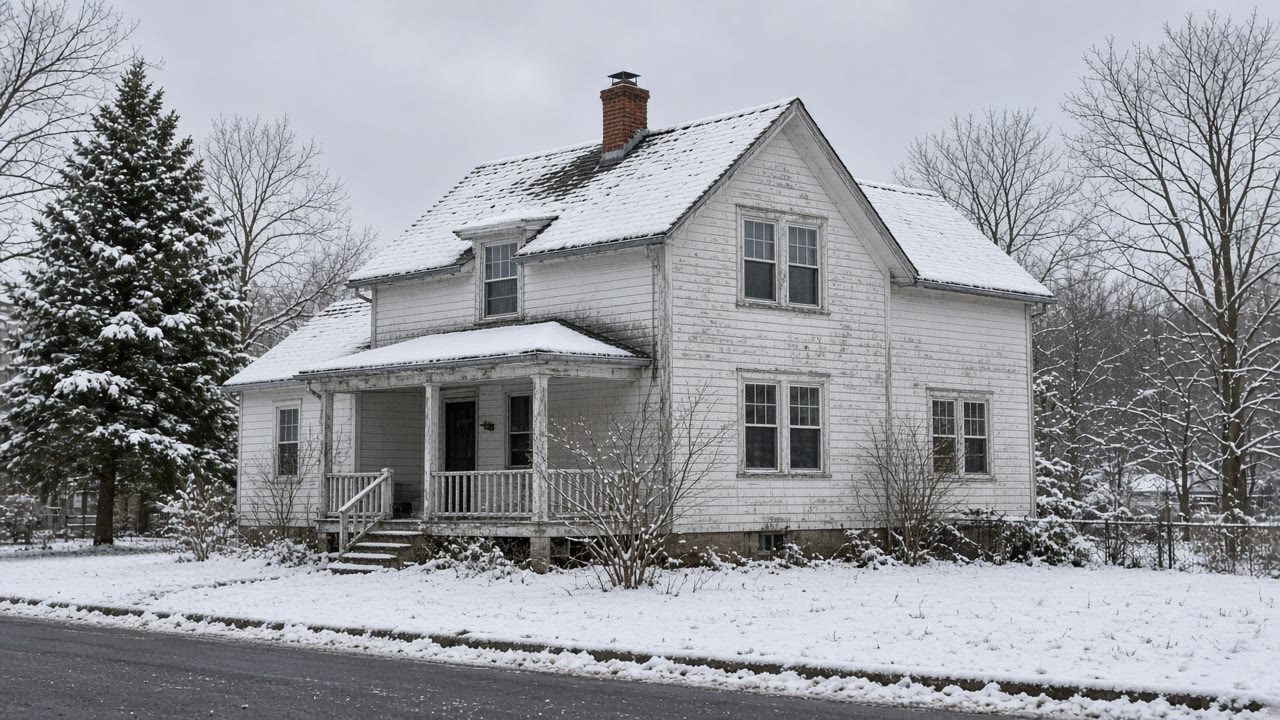
And which downspout is above it. We arrange an insured contractor who fixes the discharge before selling a new run.
Downspout questions from Geddes homeowners
Is a splash block enough, or do I need a buried pipe?
A splash block spreads the water and does not move it far, so on a lot that falls away from the house it can be enough, and on flat ground it usually is not. The target is water finishing at least five feet out on ground that carries it away. Where the lawn is level, a short extension or a buried run to a point ten feet out does the job properly.
The basement is damp on one wall only. Could it be the roof?
It is one of the first things worth ruling out, because a single downspout emptying at that wall delivers an entire roof plane's water into the ground right there. Moving the discharge is cheap and quick, and if the damp improves over the next season you have found it. If it does not, at least the roof water is no longer part of the argument.
Move the water away from the wall
Send the Geddes address and a photo after rain. No obligation, and the fix is often a few feet of pipe.