The Attic Hatch in a Solvay Village House
The biggest hole in most ceilings is the way into the attic, and it is also the cheapest one to close.
Attic Ventilation quote in Solvay
Share a few details so we can confirm coverage and arrange the right next step.
Would you rather talk it through? Call (315) 640-3590, answered 24/7.
$100 off your first job
Credited by us on your first booked job.
- One credit per customer per property, on your first booked job.
- Valid through December 31, 2026.
Mention this offer when you book. Full terms.
What the code asks of an attic opening
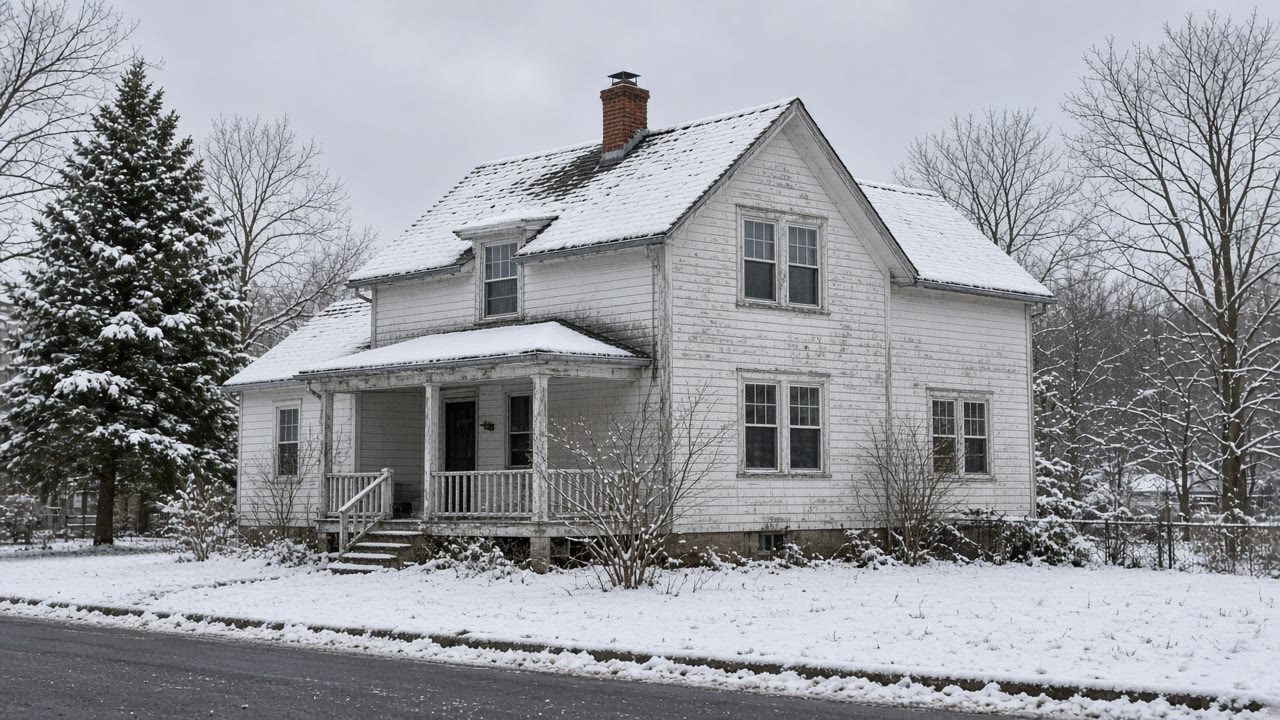
In Solvay village the median year of construction is 1947. Of 3,292 housing units, 43.1 percent were built in 1939 or earlier, 53.6 percent before 1950, 91.4 percent before 1980 and 8.6 percent in 1980 or later. 48.1 percent are single-family detached and 51.3 percent of occupied units are owner occupied.
Source: US Census Bureau, American Community Survey 2020-2024 5-year estimates, tables B25034 year structure built, B25035 median year structure built, B25024 units in structure and B25003 tenure, accessed 2026-09-14
Table R402.5.1.1 of the 2025 Energy Conservation Construction Code of New York State requires that access openings, drop-down stairs and knee wall doors to unconditioned attic space be sealed with gasketing materials that allow repeated entrance over time, that an air barrier be installed in any dropped ceiling or soffit separating it from unconditioned space, and under R402.2.5 that hatches and doors be insulated to the same R-value as the ceiling they sit in.
Source: 2025 Energy Conservation Construction Code of New York State, via UpCodes, accessed 2026-09-14
Section R402.5.1.3 of the 2025 Energy Conservation Construction Code of New York State sets the maximum air leakage rate at 3.0 air changes per hour in Climate Zones 4 and 5, tightening to 2.5 in Zone 6, verified by test.
Source: 2025 Energy Conservation Construction Code of New York State, via UpCodes, accessed 2026-09-14
Why the way into a Solvay attic matters most
Start with the largest opening and work down. Table R402.5.1.1 of the 2025 Energy Conservation Construction Code of New York State requires access openings, drop-down stairs and knee wall doors to unconditioned attic space to be sealed with gasketing that survives repeated use, requires an air barrier behind any dropped ceiling or soffit backing onto attic space, and under R402.2.5 requires the hatch or door itself to be insulated to the same R-value as the ceiling around it. A bare plywood panel meets none of that. Solvay is where it pays off fastest, because 91.4 percent of the village was built before 1980 and none of that housing was ever built to an air leakage standard at all.
What a hatch job involves and what it changes
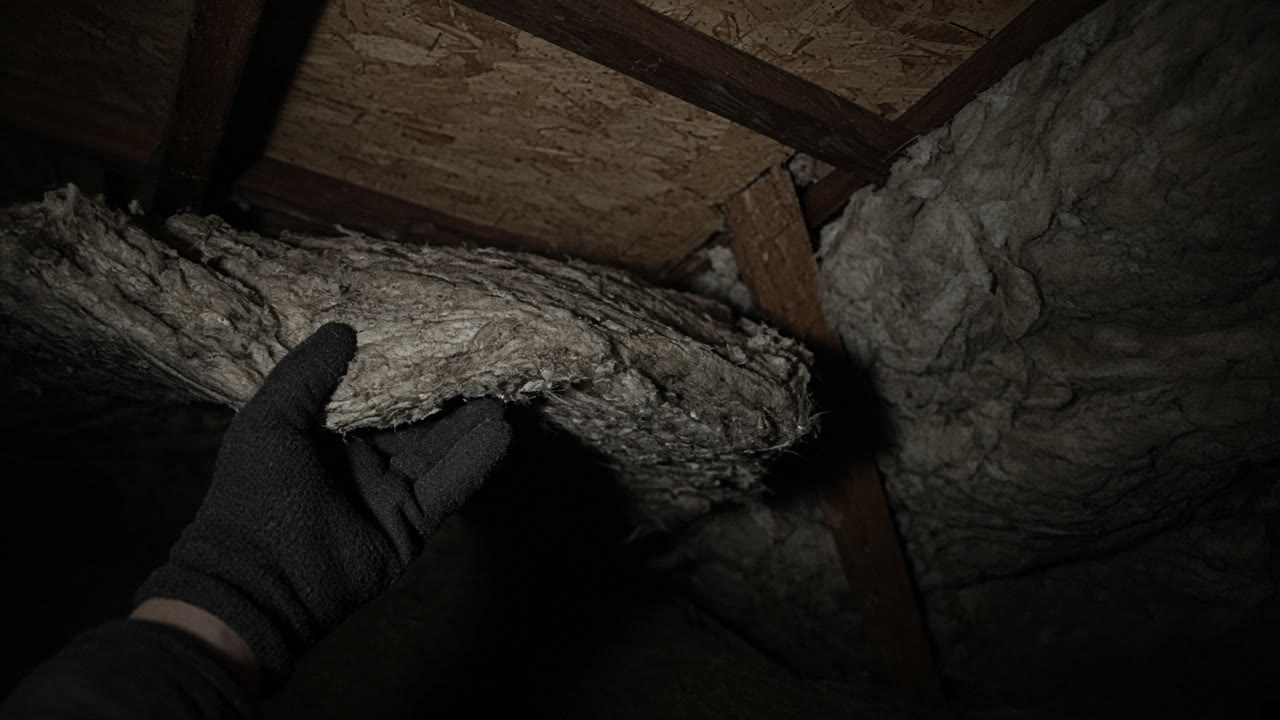
New work in this county has to prove airtightness by test at 3.0 air changes per hour, and nothing in this village was ever tested, which means a frosted deck here is the expected behavior of the building rather than a defect somebody introduced. That is not a reason to accept it. It is a reason to spend the money indoors where it works: a gasketed, insulated hatch or a boxed and weatherstripped pull-down stair, done properly, closes the single largest path in most ceilings for a modest cost and it does it without touching the roof. Once that is done, the remaining openings can be measured against each other sensibly.
Deal with the largest opening first
A pull-down stair or an uninsulated hatch is usually the biggest single hole in a ceiling, and closing it is the cheapest useful work in the attic.
Insulate the panel, not just the frame
The code asks for the hatch itself to match the ceiling R-value. A gasket on a bare board stops the draft and leaves a cold plate that drips.
Expect an old house to have many paths
Nothing here was built to an airtightness test. That makes this normal rather than a fault, and it makes a list of openings more useful than one product.
Tell us how you get into the attic
A hatch, a pull-down stair or nothing at all. We arrange an insured contractor who starts with the biggest opening.
Related attic and roof work in Solvay
Attic access questions from Solvay homeowners
Water drips off the hatch onto the landing. Is the roof leaking?
Usually not. An uninsulated hatch panel is a cold surface hanging in the ceiling, and warm humid air in the hallway condenses on its underside exactly as it would on a cold window. Insulating the panel and gasketing the frame normally stops it completely, and it costs a fraction of anything involving the roof.
Can a pull-down stair be sealed without losing the use of it?
Yes. The usual approach is an insulated box or a purpose-made cover that sits over the opening in the attic, with weatherstripping where it lands, so the stair still comes down when you need it. It adds a step when you go up there and it closes a hole that is open to your ceiling every hour of the year.
Close the largest hole in your ceiling
Send the Solvay address and a photo of the hatch. No obligation, and this is usually a small, cheap job.